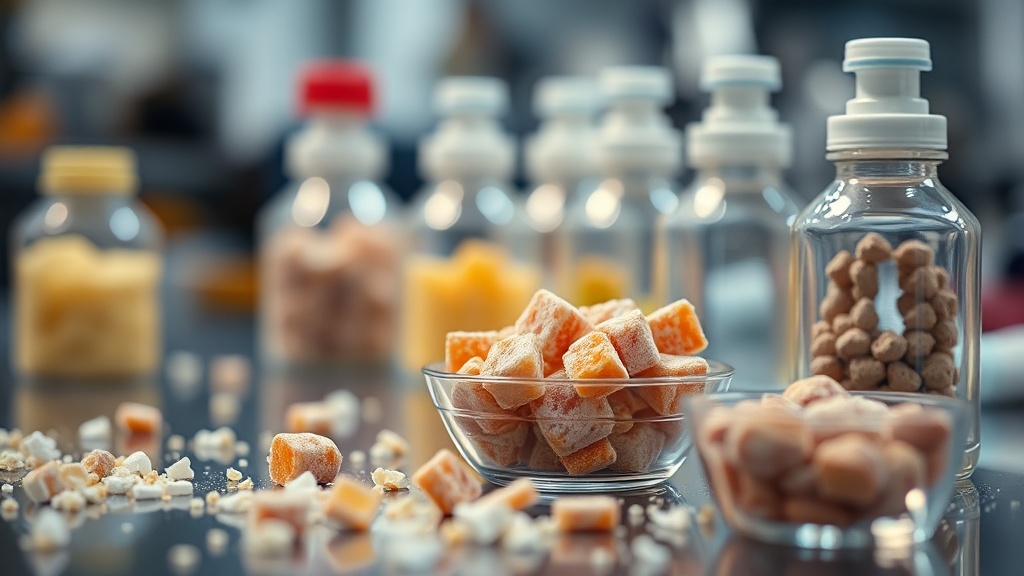
Understanding the relationship between artificial sweeteners and insulin response is one of the most pressing questions in modern metabolic health research. While these substitutes are universally marketed as “sugar-free” and metabolically inert, mounting scientific evidence suggests their biological impact is far more nuanced than a simple calorie count implies. For bio-hackers, longevity researchers, and anyone invested in precision health, dismissing sweeteners as harmless could be a costly oversight — one that manifests silently in your fasting insulin levels, gut microbiome composition, and long-term metabolic resilience.
This article synthesizes peer-reviewed research, clinical observations, and real-world CGM (Continuous Glucose Monitor) data to provide a rigorous, evidence-based breakdown of how different sweeteners interact with your endocrine system — and what that means for your longevity protocol.
What Are Artificial Sweeteners? Defining the Landscape
Artificial sweeteners are non-nutritive chemical or plant-derived compounds used as sugar substitutes, engineered to deliver intense sweetness — often hundreds of times sweeter than sucrose — with negligible caloric contribution [1]. They are widely used in processed foods, diet beverages, and pharmaceutical products, primarily marketed for weight management and glycemic control.
The category is broad and heterogeneous. It includes high-intensity synthetic compounds such as sucralose, saccharin, and aspartame, as well as natural-origin alternatives like stevia glycosides and the sugar alcohol erythritol. The critical mistake most consumers — and even some clinicians — make is treating these compounds as a monolithic group. They are not. Their molecular structures differ fundamentally, and so do their metabolic footprints.
According to data published by the World Health Organization, non-sugar sweeteners do not confer long-term benefit in reducing body fat, and the organization has issued advisories cautioning against their routine use for weight control — a significant reversal of the prevailing public health narrative that framed them as a safe alternative to sugar.
- Sucralose (Splenda): A chlorinated sucrose derivative; poorly absorbed but metabolically active in the gut.
- Saccharin: One of the oldest synthetic sweeteners; strongly implicated in gut microbiota disruption.
- Aspartame: Metabolized into phenylalanine, aspartic acid, and methanol; highly debated in neurological and metabolic literature.
- Stevia (Steviol glycosides): Plant-derived from Stevia rebaudiana; generally regarded as metabolically inert.
- Erythritol: A four-carbon sugar alcohol; approximately 90% absorbed in the small intestine and excreted unchanged in urine.
The Cephalic Phase Insulin Response: Does Sweet Taste Alone Trigger Insulin?
The cephalic phase insulin response (CPIR) is a neurally mediated, anticipatory release of insulin triggered by sensory stimulation — including taste — before glucose even enters the bloodstream [3]. Emerging data suggest that consuming sweet-tasting substances, even without caloric content, may activate this reflex in susceptible individuals.
This mechanism operates through the activation of T1R2/T1R3 heterodimeric sweet taste receptors, located not only on the tongue but distributed throughout the gastrointestinal epithelium. When these receptors are stimulated, they can trigger the release of glucagon-like peptide-1 (GLP-1) and glucose-dependent insulinotropic polypeptide (GIP) — incretins that potentiate pancreatic beta-cell insulin secretion [2].
“The gut is not a passive conduit. It is a sophisticated endocrine organ, and sweet taste receptors in the intestinal wall can initiate hormonal cascades that meaningfully alter insulin dynamics — even in the absence of glucose.”
— Summary derived from mechanistic research on intestinal chemosensing [2][3]
The magnitude of the CPIR is highly variable between individuals. Some studies report a measurable, though modest, insulin spike in response to sweet-tasting solutions without glucose, while others show no detectable response. This individual variability is precisely why population-level dietary guidelines often miss the mark for precision health practitioners. For a deeper exploration of how to quantify your personal metabolic responses, our curated resource on data-driven longevity strategies provides actionable frameworks for CGM-based self-experimentation.
Gut Microbiome Disruption: The Hidden Mechanism Behind Sucralose and Saccharin
Certain sweeteners — particularly sucralose and saccharin — have been demonstrated to alter gut microbiota composition, leading to impaired glucose tolerance even in previously healthy individuals [2]. This gut-mediated pathway represents a physiological mechanism entirely distinct from direct insulin stimulation.
The landmark 2014 study published in Nature by Suez et al. remains the most cited evidence in this domain [2]. Researchers demonstrated in both murine models and human subjects that saccharin, sucralose, and aspartame could induce glucose intolerance — not through direct interaction with the endocrine pancreas, but by disrupting the balance of Bacteroides, Clostridiales, and other key bacterial taxa in the gut microbiome. Germ-free mice, when colonized with microbiota from sweetener-fed donors, subsequently developed glucose intolerance themselves, providing compelling mechanistic evidence [2].

The clinical implications are substantial. If a sweetener consumed to avoid a glycemic spike paradoxically degrades your microbiome’s ability to regulate glucose tolerance over weeks and months, the net metabolic outcome may be worse than moderate sugar consumption. This is not a hypothetical scenario — it is a documented phenotypic outcome in controlled studies [2].
- Saccharin: Demonstrated the strongest association with microbiome dysbiosis in the Suez et al. cohort.
- Sucralose: Shown to reduce populations of beneficial Lactobacillus and Bifidobacterium species at high doses.
- Stevia and Erythritol: Currently show a comparatively benign microbiome profile in available literature, though long-term data remain limited.
Chronic Consumption and Insulin Resistance: What the Longitudinal Data Shows
Observational studies tracking chronic high-intensity sweetener consumption have reported associations with increased insulin resistance over time, suggesting that habitual use may progressively impair the body’s sensitivity to insulin — independent of body weight or total caloric intake [6].
It is critical to distinguish correlation from causation here: individuals who consume more diet beverages may already have higher baseline metabolic risk. However, several prospective cohort studies, controlling for BMI and baseline diet quality, have maintained a statistically significant association between chronic artificial sweetener intake and markers of insulin resistance, including elevated fasting insulin and homeostatic model assessment of insulin resistance (HOMA-IR) scores [6].
A 2020 study in Cell Metabolism further demonstrated that short-term sucralose consumption paired with a carbohydrate load produced measurable impairment in insulin sensitivity in healthy volunteers who were not habitual sweetener users [3]. The effect was not observed when sucralose was consumed in isolation — only in combination with glucose — suggesting a synergistic interaction between sweetener-activated gut receptors and postprandial insulin dynamics.
“Participants who consumed sucralose with glucose showed significantly altered insulin sensitivity and brain responses to sweet stimuli compared to controls, indicating that the combination — not the sweetener alone — may be the critical metabolic disruptor.”
— Adapted from Small et al., Cell Metabolism, 2020 [3]
Erythritol and Stevia: The Safer Alternatives for Insulin Management
Among available sweeteners, erythritol and stevia glycosides consistently demonstrate the most favorable metabolic profile, with clinical studies confirming they do not elicit a significant rise in blood glucose or insulin in healthy individuals [4].
Erythritol is a four-carbon polyol that is absorbed rapidly in the proximal small intestine via passive diffusion and excreted renally without significant metabolism [4]. Because it is absorbed before reaching the large intestine in most individuals, it has minimal interaction with colonic microbiota — addressing the microbiome disruption concern raised by other sweeteners. Its insulin index is effectively zero in controlled trials.
Stevia, derived from the Stevia rebaudiana plant, acts as an antagonist or neutral ligand at some sweet taste receptor subtypes rather than a full agonist, which may explain its comparatively muted incretin response. Research published by the National Institutes of Health has documented that steviol glycosides do not significantly alter postprandial glucose or insulin area under the curve (AUC) in both diabetic and non-diabetic populations [4].
- Erythritol: Zero glycemic index; minimal gut fermentation; excreted unchanged; preferred by ILA-affiliated researchers for metabolic protocols.
- Stevia (Rebaudioside A): Plant-derived; negligible insulin response; anti-inflammatory properties observed in preclinical studies.
- Monk Fruit (Luo Han Guo): Similar profile to stevia; contains mogrosides rather than steviol glycosides; growing evidence of favorable glycemic profile.
The Bio-Hacker’s Protocol: Using CGM Data to Personalize Sweetener Choices
Individual glycemic and insulinemic responses to artificial sweeteners vary dramatically, making personalized real-time data from Continuous Glucose Monitors (CGM) indispensable for anyone optimizing their metabolic health protocol [5].
Population averages are insufficient tools for precision biology. The same dose of sucralose may produce zero glycemic perturbation in one individual and a measurable 15–20 mg/dL glucose spike in another — driven by differences in gut microbiome composition, incretin sensitivity, and baseline insulin signaling capacity [5]. This is the core argument for the bio-hacking community’s adoption of CGM as a standard tool, not merely a clinical instrument for diabetics.
A structured 14-day CGM self-experiment targeting sweetener responses should incorporate the following elements:
- Baseline stabilization (Days 1–3): Eliminate all sweeteners and establish your personal fasting glucose range and postprandial curve with a standardized glucose load.
- Single-sweetener introduction (Days 4–7): Introduce one sweetener type per testing window. Consume with and without a carbohydrate load to test for the synergistic effect documented in the Cell Metabolism study [3].
- Washout period (Days 8–10): Return to baseline conditions. Monitor for delayed microbiome-mediated glucose intolerance effects.
- Cross-comparison phase (Days 11–14): Test your next sweetener candidate under identical conditions for direct comparison.
- Data analysis: Compare glucose AUC, peak glucose delta, time-to-return-to-baseline, and glucose variability indices (standard deviation, coefficient of variation).
This is not a theoretical framework — it is the operational protocol adopted by members of the International Longevity Alliance (ILA) in structured self-experimentation programs. The goal is not to identify which sweetener is “safe” in the abstract, but to determine which sweetener is safe for your specific biology at your current metabolic age.
Practical Recommendations from the ILA Research Community
Based on the current body of evidence, the ILA recommends a tiered approach to sweetener selection: prioritize erythritol and stevia for daily use, approach sucralose and saccharin with caution, and validate all choices with personal CGM data rather than relying on population-level safety claims [4][5][6].
The broader strategic goal, however, is the gradual downregulation of the sweet taste reward pathway itself. Chronic sweet taste stimulation — even without caloric consequence — maintains neurological hedonic hunger signals that can undermine caloric regulation and metabolic discipline. True metabolic freedom involves reducing dependency on sweetness as a flavor modality, not merely substituting one sweet substance for another.
For longevity-focused practitioners, the compound interest of metabolic optimization accrues over decades. A modest but chronic elevation in fasting insulin — driven by habitual sweetener-mediated microbiome disruption — is not a benign finding. It is an upstream driver of insulin resistance, reduced AMPK signaling, impaired autophagy, and accelerated biological aging.
Frequently Asked Questions
Do artificial sweeteners raise insulin levels even without sugar?
Yes, in some individuals and under certain conditions. The cephalic phase insulin response (CPIR) suggests that the sweet taste sensation alone can trigger a small, early release of insulin before any glucose enters the bloodstream [3]. Additionally, sweeteners like sucralose consumed simultaneously with carbohydrates have been shown in clinical studies to impair insulin sensitivity compared to carbohydrates consumed alone [3]. The effect is not universal — individual variability is high — which is why CGM-based personal testing is recommended over blanket assumptions [5].
Which sweeteners are safest for people managing insulin resistance?
Based on current clinical evidence, erythritol and stevia glycosides are the most insulin-neutral options available [4]. Both compounds consistently show negligible impact on blood glucose and insulin levels in controlled trials involving both healthy and diabetic populations. They also demonstrate a comparatively minimal impact on gut microbiota composition relative to sucralose and saccharin [2][4]. For individuals managing insulin resistance, these two options represent the most evidence-supported choices, pending personal CGM validation.
Can long-term use of artificial sweeteners cause insulin resistance?
Observational data suggest a meaningful association between chronic high-intensity sweetener consumption and increased markers of insulin resistance, including elevated HOMA-IR scores [6]. The proposed mechanisms include gut microbiome dysbiosis leading to impaired glucose metabolism [2], altered incretin signaling through intestinal sweet taste receptors, and potentially conditioned hormonal responses from chronic sweet taste stimulation. While causal evidence from long-term randomized controlled trials remains limited, the precautionary principle — supported by the WHO’s 2023 advisory — argues for minimizing habitual use of synthetic sweeteners in favor of whole-food dietary strategies.
Scientific References
- [1] Sylvetsky, A.C., & Rother, K.I. (2018). Nonnutritive Sweeteners in Weight Management and Chronic Disease. Obesity, 26(4), 635–640. https://pubmed.ncbi.nlm.nih.gov/29570245/
- [2] Suez, J., et al. (2014). Artificial sweeteners induce glucose intolerance by altering the gut microbiota. Nature, 514, 181–186. https://www.nature.com/articles/nature13793
- [3] Small, D.M., et al. (2020). Sucralose with a Carbohydrate Impairs Insulin Sensitivity. Cell Metabolism, 31(3), 493–502. https://www.cell.com/cell-metabolism/fulltext/S1550-4131(20)30057-7
- [4] Anton, S.D., et al. (2010). Effects of stevia, aspartame, and sucrose on food intake, satiety, and postprandial glucose and insulin levels. Appetite, 55(1), 37–43. https://pubmed.ncbi.nlm.nih.gov/20303371/
- [5] Hall, K.D., et al. (2017). Glucotypes reveal new patterns of glucose dysregulation. PLOS Biology. https://journals.plos.org/plosbiology/article?id=10.1371/journal.pbio.2005143
- [6] Imamura, F., et al. (2015). Consumption of sugar sweetened beverages, artificially sweetened beverages, and fruit juice and incidence of type 2 diabetes. BMJ, 351, h3576. https://www.bmj.com/content/351/bmj.h3576