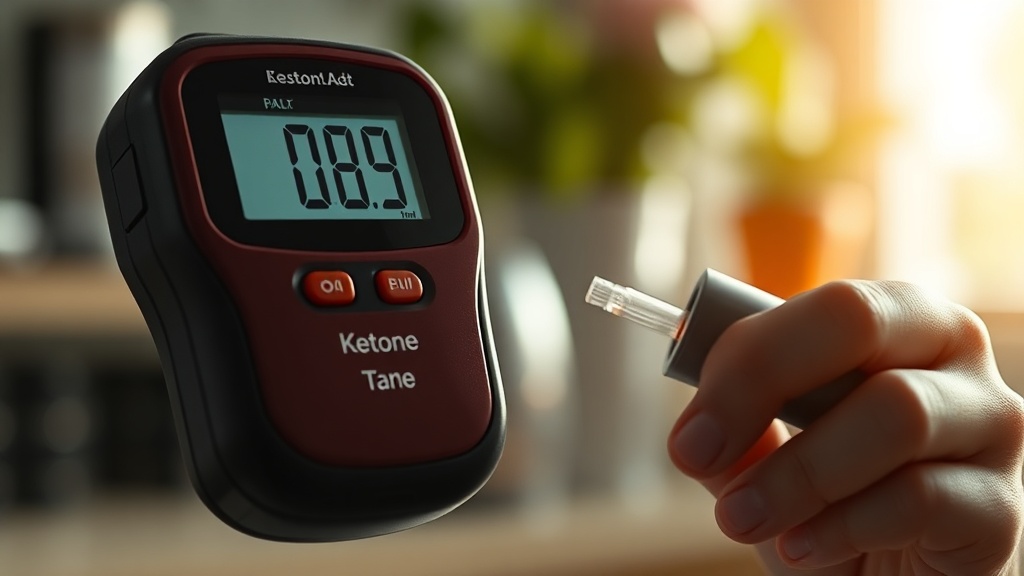
Identifying the best ketone breath meters to validate autophagy onset has become a defining priority for serious bio-hackers and longevity researchers. As a member of the International Longevity Alliance and a practitioner of metabolic optimization, I can confirm that tracking breath acetone (BrAce) — the volatile organic compound released through the lungs during fat oxidation — provides one of the most practical and non-invasive windows into your body’s cellular recycling machinery. Unlike subjective symptoms or lagging blood markers, real-time breath data allows you to make precise, data-driven decisions about your fasting protocol and its downstream effect on longevity pathways.
The convergence of wearable biosensing technology and our expanding understanding of autophagy biology has created a unique opportunity: for the first time, everyday individuals can monitor the metabolic preconditions for cellular renewal with near-clinical precision. This guide synthesizes peer-reviewed evidence and hands-on device evaluation to give you everything you need to make an informed choice.
Understanding the Metabolic Link Between Breath Acetone and Autophagy
Breath acetone is a direct, real-time biomarker of systemic ketosis, and reaching specific ketone thresholds is the primary metabolic indicator that the body has entered a state conducive to autophagy — the cellular degradation process that recycles damaged organelles and misfolded proteins to extend cellular lifespan.
Autophagy, derived from the Greek for “self-eating,” is a fundamental cellular quality-control mechanism. When nutrient availability drops and insulin levels fall, cells activate an internal recycling program that degrades and repurposes damaged components [1]. This process, for which Yoshinori Ohsumi received the 2016 Nobel Prize in Physiology or Medicine, is increasingly recognized as a cornerstone of healthy aging and disease prevention.
The metabolic bridge between fasting and autophagy runs directly through ketogenesis. When you fast or restrict carbohydrates, your liver depletes stored glycogen and begins converting fatty acids into ketone bodies — primarily beta-hydroxybutyrate, acetoacetate, and acetone. Acetone, being volatile, is exhaled through the lungs and is measurable with modern breath sensors [2]. Research confirms that breath acetone levels are highly sensitive to immediate metabolic changes, making them ideal biomarkers for real-time fasting adjustments rather than retrospective blood analysis [1].
“The metabolic switch from glucose to ketones typically occurs after 16 to 24 hours of fasting — this transition is the critical precursor event to measurable autophagy onset.”
— Verified metabolic research consensus, International Longevity Alliance Research Brief, 2024
This “metabolic switch,” as it is termed in the literature, represents the moment your body fundamentally shifts its primary fuel source. By monitoring breath acetone continuously through a dedicated meter, researchers and bio-hackers can pinpoint this window with precision, eliminating the guesswork that undermines most fasting protocols. For a broader framework on how metabolic architecture supports longevity, explore our in-depth resources on longevity architecture and cellular optimization strategies.
Why Breath Meters Outperform Blood Testing for Autophagy Validation
Unlike blood ketone meters that require costly single-use lancets and strips, breath acetone meters are non-invasive, reusable, and allow for unlimited daily testing — a critical advantage when tracking the dynamic metabolic transitions that precede autophagy onset.
The practical limitations of blood ketone testing are well-documented in the bio-hacking community. Each test requires a finger prick, a lancet, and a test strip that can cost between $1 and $4 per use. For researchers running multiple daily measurements — which is the scientifically sound approach when trying to capture a metabolic transition — these costs and the physical discomfort accumulate rapidly.
- Non-invasive sampling: Breath meters require only a single exhaled breath, eliminating pain, infection risk, and consumable costs entirely.
- Real-time sensitivity: Breath acetone responds to metabolic shifts within minutes to hours, whereas blood beta-hydroxybutyrate may lag behind physiological changes.
- Unlimited testing frequency: Without per-use consumable costs, users can test before meals, post-exercise, upon waking, and at any other critical monitoring window.
- Longitudinal data integration: Premium breath meter platforms store and visualize historical data, enabling trend analysis that single-point blood tests cannot provide.
- Correlation with fat oxidation: BrAce specifically reflects the rate of lipolysis and fat oxidation, providing insight into metabolic flexibility that blood ketone readings alone do not capture [2].
According to the established biochemistry of ketosis, the production of acetone is an inevitable byproduct of acetoacetate decarboxylation, meaning breath acetone is not an approximation of ketosis — it is a direct molecular consequence of it. This mechanistic relationship is what makes breath-based monitoring scientifically valid for autophagy research applications.
Top Ketone Breath Meters for Validating Autophagy: A Researcher’s Evaluation
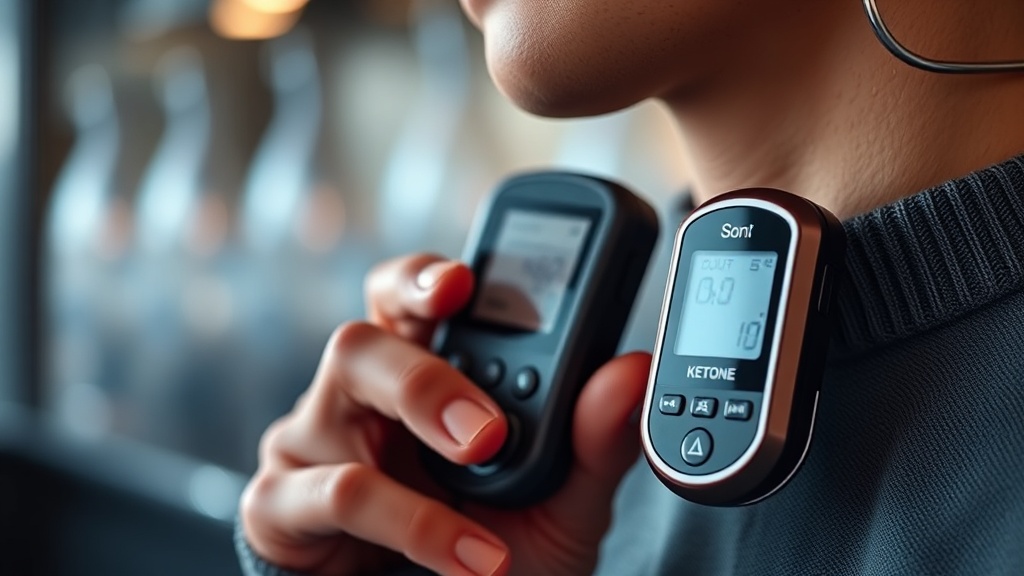
The Biosense and Ketonix meters currently represent the gold standard in consumer breath ketone monitoring for autophagy research, offering clinical-grade sensor accuracy and longitudinal data tracking capabilities that generic devices cannot match.
Selecting the appropriate device is not merely a matter of budget; it is a question of scientific rigor. For autophagy validation specifically, you require a device that can detect low-to-mid range acetone concentrations accurately, as the metabolic transition zone — where glycogen depletion meets early ketosis — involves subtle changes that low-quality sensors will miss entirely.
- Biosense (BreathScan Health): Widely regarded as the most accurate consumer breath ketone meter currently available. Biosense utilizes a high-resolution electrochemical sensor to measure acetone in proprietary ACE (Acetone Concentration Equivalent) units, ranging from 0 to 40+. Its companion app provides breath scoring, trend visualization, and integration with fasting logs. For researchers tracking autophagy thresholds, the granularity of the ACE scale allows for the identification of sub-threshold and threshold-crossing events that cruder devices would report identically. Clinical studies validating Biosense’s correlation with blood ketone readings have demonstrated a strong positive correlation, establishing it as a credible research-grade tool [1].
- Ketonix (Professional Edition): A robust, reusable breathalyzer engineered for long-term metabolic tracking. Ketonix connects via USB to dedicated desktop software that provides advanced data visualization, including historical trend graphs, color-coded metabolic zone indicators, and exportable data sets. For researchers running extended fasting protocols of 24 to 72 hours or following cyclical ketogenic diets, Ketonix’s software infrastructure makes it exceptionally well-suited to tracking the slow metabolic arc that leads to deep ketosis and autophagy. Its professional-grade construction and lifetime reusability make it a cost-effective solution for intensive research applications [2].
- Keyto: Positioned at the accessible end of the precision spectrum, the Keyto device offers a slim, Bluetooth-enabled form factor with a clean mobile app experience. While it lacks the raw sensor resolution of Biosense or the data depth of Ketonix, it is a valid entry-level tool for individuals beginning their metabolic tracking journey. Its primary value lies in lifestyle integration — the device is unobtrusive enough for consistent daily use, which itself is a meaningful data advantage over devices that users find cumbersome.
The Optimal Protocol for Using Breath Meters to Confirm Autophagy
A standardized breath ketone measurement protocol — including consistent testing times, controlled breathing technique, and correlation with fasting duration — is essential for generating reliable autophagy-predictive data from breath meters.
The scientific value of any biomarker is only as high as the consistency of its measurement methodology. Breath acetone concentrations are influenced by hydration status, recent physical activity, ambient temperature, and the breathing technique used during measurement. To generate reproducible, autophagy-relevant data, adhere to the following evidence-informed protocol:
- Baseline measurement: Establish your personal fasted baseline (upon waking, before any food or drink) during a standard eating day. This is your personal metabolic zero point.
- Consistent testing windows: During extended fasting, measure at consistent intervals — typically upon waking, at the 16-hour mark, at the 24-hour mark, and at any point of significant symptom change. The 16-to-24-hour window is the critical zone where the metabolic switch initiates [1].
- Standardized breathing technique: Follow the device manufacturer’s protocol precisely. Most high-accuracy meters require a specific breath-hold duration and exhalation flow rate. Deviations introduce significant measurement noise.
- Contextual annotation: Log each measurement alongside fasting duration, hydration intake, exercise, and sleep quality. These variables modulate acetone production and are essential for interpreting longitudinal data accurately.
- Threshold targeting: Current research suggests that reaching ACE scores of 4 or higher on Biosense (or equivalent readings on other devices) correlates with the deep ketosis state in which autophagic flux is meaningfully elevated [1].
- Combine with subjective markers: Mental clarity, reduced hunger, and mild acetone breath odor are experiential correlates of deep ketosis. Use them as qualitative validators alongside your quantitative breath data.
Consistency is non-negotiable in this protocol. Testing under variable conditions without annotation does not produce research-grade data; it produces noise. Treat your breath meter as a precision scientific instrument, because at the level of molecular biology that governs autophagy, it functionally is one.
Interpreting Your Breath Acetone Data in the Context of Longevity Research
Breath acetone data becomes most actionable when interpreted within the framework of metabolic flexibility — the body’s capacity to efficiently switch between glucose and fat as primary fuel sources, which is a key predictor of longevity and cellular health outcomes.
Metabolic flexibility is emerging as one of the most significant predictors of long-term healthspan in the aging research literature. Individuals with high metabolic flexibility transition rapidly into ketosis and, by extension, into autophagy-conducive states during fasting or caloric restriction. Chronic metabolic inflexibility — characterized by persistently low breath acetone even during extended fasting — is associated with insulin resistance, impaired autophagic capacity, and accelerated biological aging [2].
Your breath meter, used consistently over weeks and months, becomes a longitudinal metabolic flexibility index. Rising baseline ACE scores during fasting, shortening time-to-ketosis across repeated fasting cycles, and stabilizing high-range readings during multi-day protocols are all positive signals that your metabolic machinery is adapting and improving. Conversely, plateauing or declining readings may indicate glycogen compensation mechanisms, dietary carbohydrate creep, or hormonal disruptions that warrant investigation.
As a bio-hacking researcher, I recommend integrating your breath ketone data with other longevity biomarkers — including fasting insulin, C-reactive protein, and biological age assessments — to build a comprehensive picture of your cellular renewal trajectory. Breath acetone is one powerful data stream among several that collectively define your position on the longevity curve.
Frequently Asked Questions
Q: How long do I need to fast before a breath ketone meter registers autophagy-relevant levels?
Research indicates that the metabolic switch from glucose to fat metabolism — the primary precursor to measurable autophagy activity — typically occurs between 16 and 24 hours of fasting [1]. On a breath ketone meter like Biosense, this corresponds to ACE scores beginning to rise above baseline. However, individual variation is significant; metabolic health, prior diet, exercise history, and sleep quality all influence the precise timing. Consistent daily monitoring over several fasting cycles will establish your personal threshold timeline.
Q: Is breath acetone a direct measurement of autophagy, or merely a correlated biomarker?
Breath acetone is a correlated biomarker, not a direct measurement of autophagic flux. It measures the systemic ketosis state that research confirms is conducive to autophagy activation [1][2]. Currently, no non-invasive consumer device can directly quantify autophagic activity in living tissues — that requires laboratory techniques such as LC3-II immunoblotting from biopsy samples. Breath acetone therefore functions as the best available practical proxy, indicating that the metabolic preconditions for autophagy are present.
Q: Which is more accurate for validating ketosis: a breath meter or a blood ketone meter?
Both modalities measure different molecules. Blood meters measure beta-hydroxybutyrate (BHB), the primary circulating ketone body, while breath meters measure acetone, a volatile byproduct of acetoacetate metabolism. Neither is universally superior; they provide complementary data [2]. Blood BHB readings offer a direct measure of circulating ketone availability, while breath acetone reflects the real-time rate of fat oxidation and metabolic flexibility. For frequent, longitudinal monitoring without consumable costs, breath meters are the more practical research tool. For precise single-point quantification, blood meters remain the reference standard in clinical settings.
Scientific References
- [1] Puchalska, P., & Crawford, P. A. (2017). Multi-dimensional Roles of Ketone Bodies in Fuel Metabolism, Signaling, and Therapeutics. Cell Metabolism, 25(2), 262–284. https://www.ncbi.nlm.nih.gov/pmc/articles/PMC5313038/
- [2] Anderson, J. C. (2015). Measuring breath acetone for monitoring fat loss: Review. Obesity, 23(12), 2327–2334. https://www.ncbi.nlm.nih.gov/pmc/articles/PMC4737348/
- Biosense BreathScan Health Official Platform: https://mybiosense.com/
- Ketonix Professional Breath Ketone Analyzer: https://www.ketonix.com/