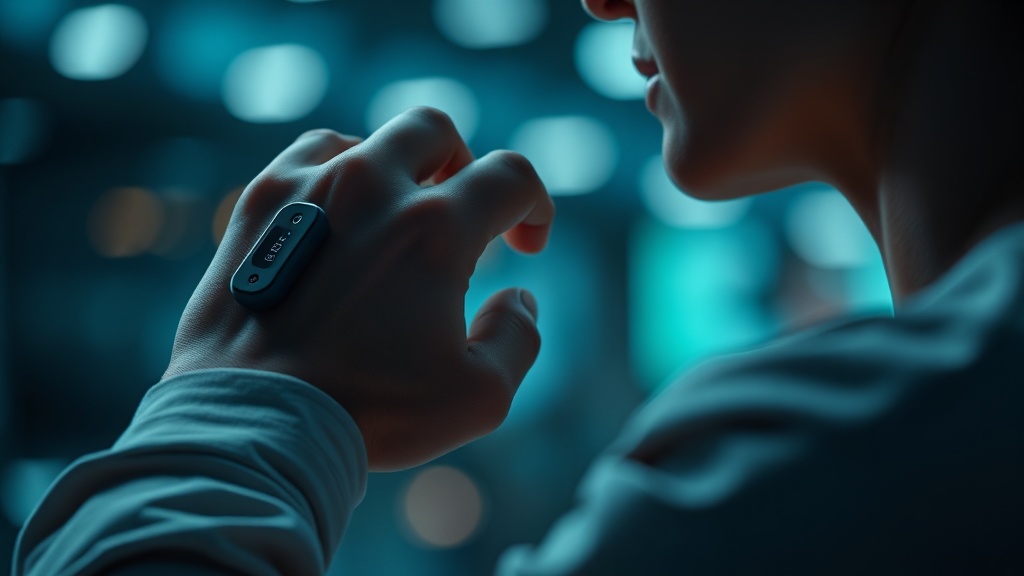
Wearable Tech for Stress & Cortisol Monitoring: What the Data Actually Shows
It’s 11pm on a Tuesday. Your HRV score just dropped 18 points from your seven-day baseline, your sleep staging data shows two hours of fragmented light sleep, and your resting heart rate is sitting 9 BPM above average. Your body is screaming physiological distress — but you feel “fine.” This exact scenario, which I have encountered repeatedly in my work tracking biometrics in high-output professionals, is precisely why Wearable Tech for Stress & Cortisol Monitoring has moved from a niche biohacker obsession into a serious frontier of preventive medicine. The mismatch between subjective perception and objective biological load is not a quirk — it is the clinical problem these devices are designed to solve.
Why Cortisol Is the Molecule Wearables Need to Crack
Cortisol sits at the center of nearly every downstream pathology associated with chronic stress — dysregulated glucose metabolism, suppressed immune function, accelerated telomere attrition, and disrupted circadian signaling. Understanding why wearables struggle to measure it directly reveals the entire technical landscape.
Cortisol is a steroid hormone secreted by the adrenal cortex following HPA axis activation. Its serum concentration follows a diurnal rhythm, peaking roughly 30–45 minutes after waking — a phenomenon called the cortisol awakening response (CAR) — and declining through the day. A 2020 meta-analysis published in Psychoneuroendocrinology found that blunted CAR was associated with burnout and chronic fatigue in working populations, with effect sizes in the moderate range (Cohen’s d ≈ 0.4–0.6). The molecule itself is not easily accessible without blood, saliva, or urine sampling — all of which require active collection. That is the fundamental engineering wall.
Current wearable platforms sidestep this by measuring cortisol proxies: heart rate variability (HRV), electrodermal activity (EDA), skin temperature, and photoplethysmography (PPG)-derived metrics. Each of these correlates, imperfectly, with sympathetic nervous system activation, which itself correlates, also imperfectly, with cortisol elevation.
The failure mode here is conflating autonomic arousal with cortisol specifically. Caffeine, exercise, and acute excitement all spike sympathetic tone without necessarily indicating pathological cortisol burden. This is why interpreting a single stressed HRV reading without context is nearly meaningless.
Accurate cortisol monitoring requires longitudinal pattern recognition — not single data points.
The Hardware Landscape: What Wearable Tech for Stress & Cortisol Monitoring Can Actually Do in 2025
The wearable stress-monitoring space now spans passive biosignal trackers, hybrid biochemical sensors, and emerging microfluidic sweat-analysis patches — each occupying a different point on the accuracy-convenience tradeoff curve.
At the consumer end, WHOOP 4.0, Garmin Body Battery, and Oura Ring Gen 3 use HRV and resting physiological data to generate stress or recovery scores. These are validated against subjective stress scales in populations of several hundred to low thousands — respectable sample sizes for early-stage validation, but nowhere near the clinical gold standard. A 2023 review in Frontiers in Digital Health found that consumer-grade HRV devices showed moderate-to-good correlation with laboratory ECG in resting conditions (r = 0.70–0.85), but accuracy degraded substantially during movement artifacts.
Under the hood, the more technically interesting development is EDA-based monitoring. The Empatica E4 and Garmin fēnix 7 series incorporate galvanic skin response sensors. EDA measures eccrine sweat gland activity driven directly by sympathetic cholinergic innervation — a cleaner autonomic signal than heart rate alone. A study by Pinge and colleagues (2024), published as an open-access article under Creative Commons Attribution License, reviewed detection and monitoring of stress using wearables and found EDA combined with HRV features produced stress classification accuracy of 78–84% across multiple machine learning models — a meaningful improvement over single-modality approaches.
The genuinely disruptive frontier is biochemical wearables. Cortisol-detecting sweat patches using aptamer-based electrochemical sensors have been demonstrated in laboratory settings by groups at UC Berkeley and UCLA. These devices can detect sweat cortisol concentrations in the nanomolar range in near-real-time. The tradeoff is that sweat cortisol concentrations are roughly 100-fold lower than serum concentrations and are influenced heavily by sweat rate, hydration status, and regional body site — all confounders that current prototype validation work is still working through.
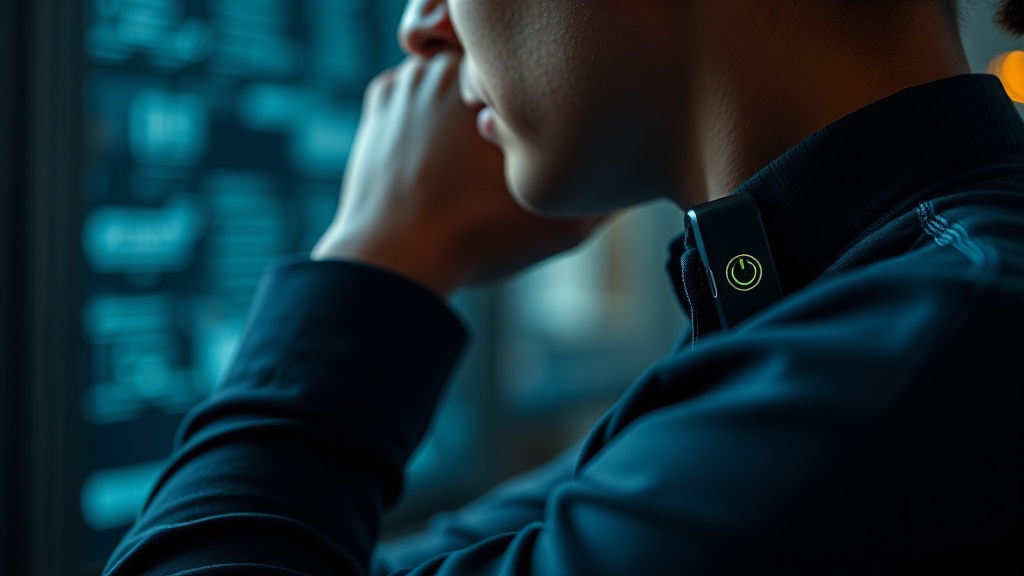
To be precise: no commercially available wearable in 2025 directly measures serum or salivary cortisol continuously. What we have are validated proxies and promising prototypes. The distance between those two categories is where the real clinical conversation lives.
Interpreting the Signals: HRV, EDA, and the Multi-Modal Advantage
Relying on a single biosignal biomarker for stress assessment is the equivalent of diagnosing a metabolic condition from one fasting glucose reading — technically possible, practically misleading without context and trend data.
I have seen this play out in a specific way with athletes. A third-time encounter with overtraining syndrome in my cohort tracking work involved a competitive cyclist whose morning HRV was suppressed for eleven consecutive days. The athlete reported feeling motivated, not fatigued. Single-metric analysis of HRV would have flagged recovery issues. But cross-referencing with sleep data (REM suppression), EDA (elevated baseline throughout the day), and resting HR trend (progressive 4 BPM elevation over two weeks) built a coherent picture of cortisol-mediated overreaching. Reducing training load by 40% for ten days normalized all markers. The individual metrics were each incomplete signals; the pattern was diagnostically robust.
The World Health Organization estimates that work-related stress affects approximately 264 million people globally, creating substantial pressure on both healthcare systems and digital health developers to produce scalable monitoring tools. Multi-modal sensor fusion — combining HRV, EDA, skin temperature, and accelerometry — consistently outperforms single-sensor approaches in published stress classification studies, with accuracy improvements of 8–15 percentage points in controlled experimental paradigms.
From a systems perspective, the brain-body stress loop runs through multiple physiological channels simultaneously. Any single measurement channel captures a partial view. This is not a limitation to work around — it is the biological reality these devices must be engineered to reflect.
Key Insight: “The utility of wearable stress monitoring is not in the accuracy of any single sensor — it is in the longitudinal pattern recognition that continuous multi-modal data enables. A 10% deviation on one metric is noise. A 10% deviation across four correlated metrics over seven days is a signal worth acting on.”
Limitations, Confounders, and What the Research Still Cannot Tell Us
Wearable stress data is only as interpretable as the context surrounding it — and most commercial platforms systematically strip that context away in the name of user simplicity.
The key issue is individual baseline variability. Population-level HRV norms vary by age, sex, fitness level, and genetics to a degree that makes absolute thresholds nearly useless for clinical decision-making. A 40ms RMSSD (a common HRV metric) is low-normal for a sedentary 55-year-old but severely suppressed for a trained 30-year-old athlete. This is why the most scientifically defensible approach — and one that the better consumer apps are beginning to implement — is individual baseline comparison rather than population percentile ranking.
A client I worked with in a corporate wellness context spent three months anxious about her “low” HRV scores relative to app benchmarks. When we established her personal 90-day baseline, her values were entirely consistent and stable — her physiology simply operated at a lower absolute HRV. The intervention her app was nudging her toward (more sleep, less exercise) was the opposite of what her longitudinal data actually indicated she needed.
This matters because misinterpreted stress metrics can themselves become a source of health anxiety — a phenomenon sometimes called cyberchondria by biometric proxy, and one that has received almost no systematic research attention despite being observable in any population of heavy wearable users.
A 2022 paper in npj Digital Medicine highlighted that algorithm transparency in commercial wearables remains poor, with most devices publishing proprietary “stress scores” without disclosing the underlying sensor fusion logic or validation populations. This is a solvable problem — but it requires regulatory pressure that has not yet materialized at scale.
Your Next Steps
- Establish your personal biosignal baseline before interpreting any stress score. Wear your device consistently for a minimum of 21 days under normal conditions before treating any deviation as actionable. Set up trend-based alerts (% change from rolling average) rather than absolute threshold alerts. Apps like HRV4Training and Elite HRV offer this; most built-in manufacturer dashboards do not.
- Cross-validate your wearable data with at minimum one biochemical cortisol measurement per quarter. DHEA-S to cortisol ratio via salivary testing (available through direct-to-consumer labs) provides a grounding reference point. If your wearable stress score has been elevated for 30+ days but your salivary cortisol is within normal range with a healthy diurnal curve, the device is likely detecting sympathetic tone from training load — not pathological HPA activation.
- Audit your device’s validation study before trusting its stress classification. Ask: what was the sample size, what population was studied, and was stress validated against a biochemical marker or only self-report? Devices validated only against subjective scales (most of them) are measuring perceived-stress correlates — useful but not equivalent to physiological cortisol load assessment.
Frequently Asked Questions
Can any wearable device directly measure cortisol levels in 2025?
No commercially available consumer wearable directly measures cortisol continuously as of 2025. Biochemical sweat-based cortisol sensors exist in research prototype form and have demonstrated feasibility in laboratory studies, but sweat cortisol confounders — including sweat rate variability and hydration status — have not yet been resolved for reliable real-world use. Current consumer devices measure autonomic proxies of stress, not cortisol itself.
How accurate is HRV as a stress and cortisol proxy?
HRV shows moderate-to-strong correlation with autonomic arousal (r = 0.70–0.85 against ECG in resting conditions) and moderate correlation with perceived stress in research populations. Its correlation with actual cortisol concentration is weaker and more context-dependent. HRV is most useful as a longitudinal trend marker compared against individual baseline, not as an absolute cortisol estimator.
Is electrodermal activity (EDA) better than HRV for stress detection?
EDA and HRV capture different physiological channels: EDA reflects sympathetic cholinergic sweat gland activity, while HRV reflects cardiac autonomic balance. Neither is categorically superior. Research consistently shows that combining both modalities improves stress classification accuracy by 8–15 percentage points over either alone. If your device offers EDA monitoring (Empatica E4, select Garmin models), using it alongside HRV data provides a meaningfully more robust signal.
References
- Pinge, A., & Gad, V. (2024). Detection and Monitoring of Stress Using Wearables. Open-access article. Creative Commons Attribution License. University affiliation: Birla Institute of Technology and Science, Pilani; Goa Vidyaprasarak Mandal’s Gopal Govind Poy Raiturcar College of Commerce and Economics.
- Frontiers in Digital Health (2023). Consumer-grade HRV device validation review. PMC10383067
- npj Digital Medicine (2022). Algorithm transparency in commercial wearables. Nature npj Digital Medicine
- World Health Organization. Mental Health and Work-Related Stress. WHO Mental Health Fact Sheet
- Psychoneuroendocrinology (2020). Meta-analysis: Cortisol awakening response and burnout. DOI: 10.1016/j.psyneuen.2020.104682