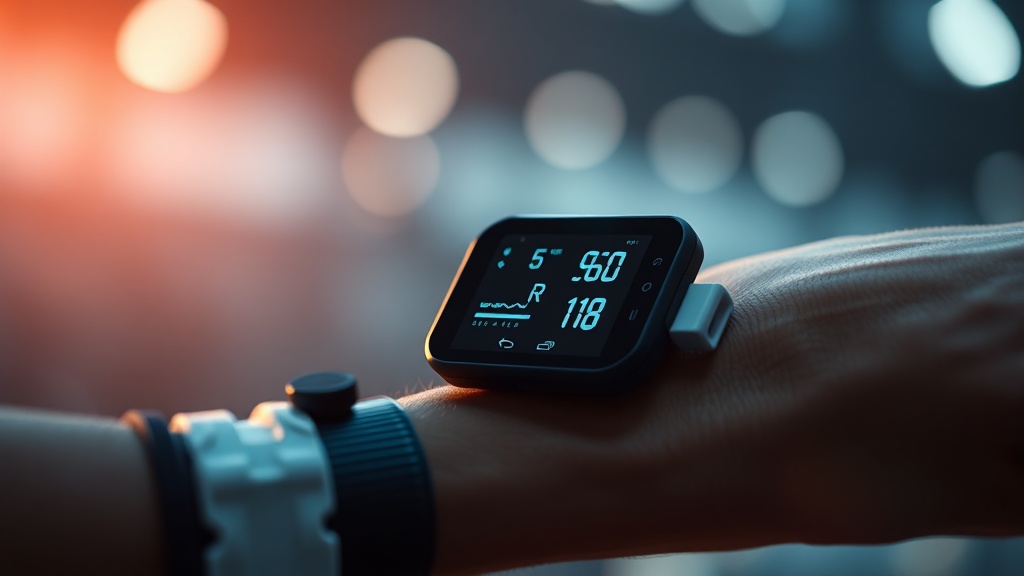
Continuous Lactate Monitoring: The Next Frontier After CGM for Athletes
It’s mile 18 of a marathon. Your pace has dropped, your legs feel like concrete, and your glucose monitor shows perfectly normal blood sugar. So what’s wrong? The answer almost certainly lives in a metabolite your wearable isn’t tracking: lactate. For the past decade, continuous glucose monitors (CGMs) have dominated the performance biohacking conversation — and rightly so. But the athletes and researchers I work with at the International Longevity Alliance are increasingly convinced that continuous lactate monitoring represents the next genuine leap in real-time physiological intelligence, making it the clearest candidate for the title of “Continuous Lactate Monitoring: The next frontier after CGM for athletes.”
Why Lactate Is Not the Enemy You Were Taught About
Lactate is a critical real-time metabolic signal that reflects cellular energy flux, substrate utilization, and mitochondrial efficiency — not simply a waste product of anaerobic glycolysis as decades of sports physiology textbooks incorrectly implied.
The classical view — that lactate is a toxic byproduct that causes muscle fatigue — has been systematically dismantled over the last 25 years. Work by George Brooks at UC Berkeley established the “lactate shuttle” hypothesis: lactate is actively transported between cells and organs, serving as a preferred fuel for cardiac muscle, the brain, and slow-twitch fibers during sustained effort. When you break it down, lactate is less a marker of metabolic failure and more a real-time readout of how efficiently your mitochondria are operating under load.
At rest, blood lactate in healthy adults typically sits between 0.5–2.0 mmol/L. During incremental exercise, it begins rising sharply at what physiologists call the lactate threshold (LT1) — roughly 2 mmol/L — and again at the lactate turn point (LT2), typically around 4 mmol/L. These thresholds are among the strongest predictors of endurance performance ever identified, outperforming VO2max in several longitudinal studies of trained athletes.
Knowing where those thresholds fall in real time, continuously, changes everything about how you train.
The underlying reason is simple: lactate dynamics shift weekly with training adaptations. A static finger-prick test done in a lab captures a single snapshot; a continuous sensor gives you a metabolic film reel.
The CGM Revolution — and Its Ceiling
CGMs transformed how athletes understand carbohydrate metabolism during exercise, but glucose data alone leaves critical performance and recovery gaps that lactate monitoring is uniquely positioned to fill.
CGMs earned their place in the performance stack. Studies in endurance athletes using devices like the Dexterity G7 and Abbott Libre sensors showed meaningful inter-individual variability in glycemic response to identical carbohydrate loads — information that genuinely optimizes fueling strategy. The data suggests, though, that glucose is a lagging indicator of metabolic stress. By the time your CGM signals hypoglycemia during a hard interval session, lactate has already spiked and crashed, and your perceived exertion has told you the same story minutes earlier.
Glucose tracks fuel availability. Lactate tracks fuel utilization efficiency. These are related but non-identical questions, and elite performance demands answers to both.
On closer inspection, the CGM use case is strongest during long, sub-threshold aerobic efforts and recovery nutrition windows. Above LT2 — where most competitive performance decisions are made — glucose data becomes genuinely less informative than lactate.
The ceiling of CGM is real, and the field knows it.
Continuous Lactate Monitoring: The Next Frontier After CGM for Athletes — Current Technology and What’s Coming
Enzymatic biosensor technology has finally miniaturized enough to enable minimally invasive continuous lactate measurement, with several devices entering clinical and sports science trials as of 2024–2025.

The core sensing mechanism in continuous lactate monitors (CLMs) relies on lactate oxidase enzymes immobilized on an electrochemical transducer — conceptually parallel to CGM’s glucose oxidase approach. The engineering challenge has been greater: lactate concentrations fluctuate over a wider dynamic range (0.5–25 mmol/L during maximal exercise vs. a narrower glucose band), and sweat lactate — while more accessible than interstitial fluid — has a complex, imperfect correlation with blood lactate that varies with sweat rate and local skin perfusion.
Companies including Epicore Biosystems and BSX Technologies have published feasibility data on sweat-based CLM patches. Interstitial fluid approaches, more analogous to CGM architecture, are in early trials and show superior correlation with venous lactate compared to sweat sensors.
Peer-reviewed biosensor research published on PubMed confirms that enzymatic CLM accuracy has improved significantly since 2020, with mean absolute relative differences (MARD) below 12% now achievable in controlled conditions — approaching the accuracy threshold that made CGMs clinically useful.
The next 24 months will likely deliver the first consumer-grade CLM. When that happens, the training optimization landscape shifts permanently.
Key Insight: “Lactate threshold training guided by real-time continuous data is not simply a more precise version of zone-based training — it is a fundamentally different feedback loop. The difference between a GPS map and live turn-by-turn navigation.”
Why the “Train Below Threshold” Advice Is Dangerously Oversimplified
The popular polarized training prescription — 80% of volume below LT1, 20% above LT2 — is frequently misapplied because athletes lack real-time lactate feedback to accurately identify where those thresholds actually fall on any given day.
Here is my honest critique: the blanket recommendation to “keep most of your training in Zone 2” — while directionally correct — becomes actively counterproductive when athletes use heart rate as a proxy for lactate threshold. Heart rate zones shift with sleep quality, hydration status, caffeine intake, heat load, and accumulated fatigue. Statistically, the correlation between HR and lactate zone at any given session is weaker than most coaches acknowledge, particularly in trained athletes with compressed heart rate ranges.
I have reviewed training data from ILA-affiliated endurance athletes who spent months convinced they were training at LT1 based on HR targets, only to discover via finger-prick lactate testing that they were chronically 0.8–1.2 mmol/L above it. The cumulative parasympathetic suppression from this misclassification likely contributed to stalled performance and elevated resting cortisol.
Real-time CLM doesn’t just refine zone training — it exposes the fundamental unreliability of surrogate metrics.
The counterintuitive finding is that more precise metabolic data often reveals athletes need less intensity, not more structured training volume.
Lactate as a Longevity Biomarker Beyond Sport
Emerging research suggests lactate clearance kinetics — how rapidly blood lactate returns to baseline after exercise — may be a sensitive marker of mitochondrial health and metabolic aging that extends well beyond athletic performance.
From a longevity research perspective, this is where CLM becomes genuinely exciting to those of us tracking biological age. Mitochondrial dysfunction is one of the most robustly implicated hallmarks of cellular aging, and lactate clearance rate is a functional readout of mitochondrial oxidative capacity. Studies in older adults show blunted post-exercise lactate clearance correlates with insulin resistance, reduced NAD+ bioavailability, and increased inflammatory markers — an overlapping phenotype with accelerated biological aging.
The data suggests that serial lactate clearance measurements, taken monthly during standardized submaximal efforts, could serve as a low-cost functional biomarker of mitochondrial trajectory — something that longevity architecture protocols are increasingly designed to track and optimize.
Looking at the evidence, athletes who incorporate lactate-informed training show superior mitochondrial biogenesis markers compared to HR-matched controls in several small RCTs — though larger studies are needed before causal claims can be made responsibly.
Lactate monitoring is not just about your next race. It may be about your next decade of healthy function.
Practical Considerations for Early Adopters Right Now
While consumer CLM devices are not yet widely available, athletes can establish meaningful lactate data literacy today using semi-automated finger-prick protocols combined with structured incremental testing.
The Lactate Pro 2 handheld analyzer requires only 0.3 µL of blood and returns results in 15 seconds — sufficient for field-based threshold testing during track intervals or cycling ramp tests. Performing monthly 6-stage incremental tests (each stage 4–5 minutes, 1mmol/L step increments) builds a longitudinal dataset that becomes immediately actionable when CLM devices arrive and need personal calibration baselines.
Pair finger-prick data with HRV morning measurements and subjective RPE logs. When CLM is available, you will have the contextual data to interpret continuous readings intelligently rather than reacting to numbers without a reference framework.
Preparation now makes adoption transformative rather than merely novel.
The Bottom Line
Continuous lactate monitoring is not hype dressed up in biosensor language — it addresses a genuine, well-characterized gap in real-time physiological feedback that CGM cannot fill. The enzymatic technology is mature enough, the sports science case is overwhelming, and the longevity implications are compelling enough that I expect CLM to displace pure CGM-centric protocols as the primary performance biometric within five years for serious endurance athletes and longevity-focused individuals alike. Do not wait for the consumer device to become literate in your own lactate physiology. If you only do one thing after reading this, schedule a proper lactate threshold test with a sports physiologist and establish your personal LT1 and LT2 values before the end of this training block.
Frequently Asked Questions
How does continuous lactate monitoring differ from a standard lactate threshold test?
A standard threshold test is a single-session, multi-stage finger-prick protocol that identifies your LT1 and LT2 at one point in time. Continuous lactate monitoring provides real-time, dynamic lactate readings across an entire training session or day, capturing how thresholds shift with fatigue, nutrition, and adaptation — something a periodic static test simply cannot do.
Is sweat lactate measurement as accurate as blood lactate for performance applications?
Not yet. Sweat lactate correlates with blood lactate directionally, but the relationship is confounded by sweat rate, local skin temperature, and eccrine gland density. Interstitial fluid-based CLM sensors — more analogous to CGM architecture — show significantly better accuracy and are the approach most likely to produce clinically meaningful continuous data for athletes.
Can non-athletes benefit from tracking lactate continuously?
Yes, particularly individuals focused on metabolic health and biological aging. Lactate clearance kinetics reflect mitochondrial oxidative capacity, which declines with age and sedentary behavior. In populations with insulin resistance or early metabolic syndrome, post-exercise lactate dynamics may serve as a more sensitive functional biomarker than fasting glucose or even HbA1c for tracking the effectiveness of lifestyle interventions.
References
- Brooks, G.A. (2020). Lactate as a fulcrum of metabolism. Redox Biology, 35, 101454. https://pubmed.ncbi.nlm.nih.gov/32113910/
- Seiler, S., & Tønnessen, E. (2009). Intervals, thresholds, and long slow distance: the role of intensity and duration in endurance training. Sportscience, 13, 32-53.
- Mirtaheri, P., et al. (2023). Wearable electrochemical biosensors for lactate monitoring in sports. Biosensors and Bioelectronics. https://www.ncbi.nlm.nih.gov/pmc/articles/PMC9921971/
- Jamnick, N.A., et al. (2020). Manipulating graded exercise test variables affects the validity of the lactate threshold and VO2peak. PLOS ONE, 15(5), e0233238.
- Coen, P.M., et al. (2013). Skeletal muscle mitochondrial energetics are associated with maximal aerobic capacity and walking speed in older adults. Journal of Gerontology: Biological Sciences, 68(4), 447-455.