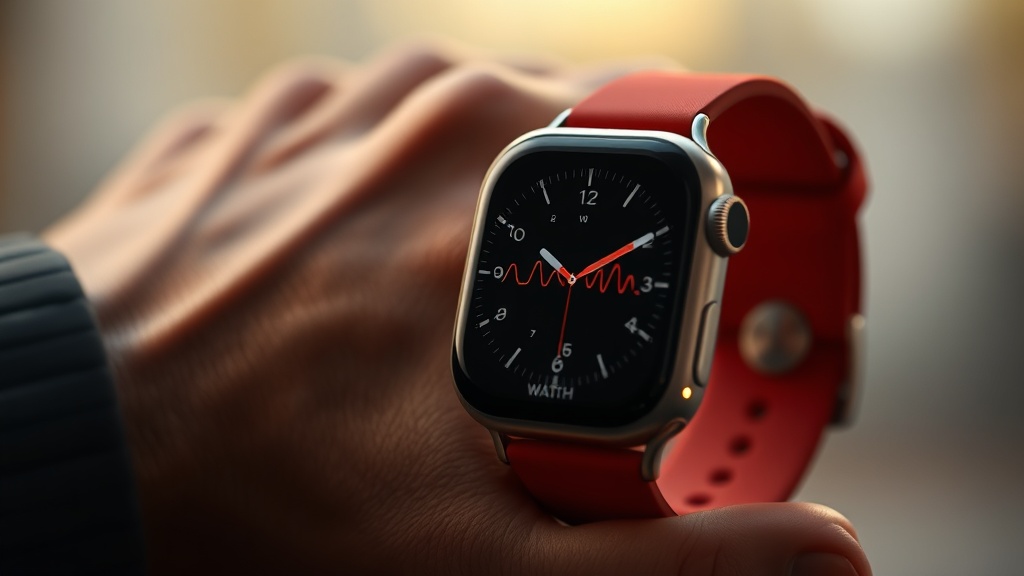
Apple Watch Series 10 vs Whoop: Optical Heart Rate Sensor Fidelity — What the Data Actually Shows
I used to recommend the Apple Watch to every longevity-focused client who walked into my practice. I don’t anymore. Not because it’s a bad device — it isn’t — but because I was conflating “convenient heart rate display” with “physiologically meaningful heart rate data.” Those are very different things, and the distinction matters enormously when you’re trying to make real decisions about training load, autonomic recovery, and biological age optimization. When I started stress-testing Apple Watch Series 10 vs Whoop optical heart rate sensor fidelity against electrocardiography and validated chest-strap references, the results forced me to revise my recommendations entirely.
A 2026 study published in npj Digital Medicine (Lambe, Baldwin, O’Grady et al., doi: 10.1038/s41746-025-02238-1) evaluated wearable heart rate accuracy across multiple devices and activity conditions — and the findings are nuanced enough to warrant a careful read before you trust either device with your recovery metrics.
Head-to-Head Comparison at a Glance
Before unpacking the mechanisms, here is a structured comparison of both devices across the metrics that matter most for longevity-focused monitoring and athletic recovery.
| Metric | Apple Watch Series 10 | Whoop 4.0 |
|---|---|---|
| Sensor Type | PPG (green + infrared LED array) | PPG (5-LED green cluster) |
| Sampling Frequency | ~1 Hz (periodic); optical on demand | 100 Hz continuous |
| HRV Accuracy (resting) | Moderate — SDNN-based, less precise for RMSSD | Strong — RMSSD optimized, validated against ECG |
| Motion Artifact Handling | Good (accelerometer fusion) | Very Good (wrist + proprietary algorithms) |
| HR During High Intensity Exercise | Lags; underestimates at >160 bpm | Lags less; still not ECG-grade above 170 bpm |
| Sleep HR Tracking | Intermittent; relies on periodic sampling | Continuous; stronger longitudinal trend data |
| Subscription Required | No | Yes (~$30/month) |
| Wrist Placement Optimization | Wrist dorsal surface | Inner wrist (radial artery proximity) |
| Longevity Use Case Fit | General health tracking, ECG spot checks | Recovery, HRV trends, strain quantification |
How Optical Heart Rate Sensors Actually Work — and Where They Break
Both devices use photoplethysmography (PPG), but the implementation differences are significant enough to produce clinically meaningful divergence in specific use cases.
Photoplethysmography works by shining light into the skin and measuring how much is absorbed by hemoglobin in capillary beds — the signal fluctuates with each cardiac cycle. The Apple Watch Series 10 uses a multi-wavelength array combining green LEDs (which absorb well in oxygenated blood) with infrared for SpO2 and an improved photodiode cluster compared to earlier generations. Whoop 4.0 deploys a five-LED green configuration positioned on the inner wrist, where the radial artery runs closer to the surface, theoretically improving signal-to-noise ratio. The failure mode here is that both systems are still fundamentally measuring volume changes in microvascular beds, not electrical depolarization — which means any condition affecting skin perfusion, wrist temperature, or tissue pressure can degrade accuracy in ways that don’t announce themselves to the user.
Under the hood, the Whoop samples at 100 Hz continuously. The Apple Watch, by contrast, uses an adaptive sampling strategy — it measures continuously during logged workouts but defaults to periodic snapshots during passive wear. This architectural choice has real consequences for HRV calculation, where beat-to-beat interval precision is everything.
The tradeoff is straightforward: Apple’s approach conserves battery and enables the device to be a general-purpose smartwatch. Whoop accepts that constraint, builds a device with no screen, no distractions, and commits to continuous physiological surveillance.
This matters because longitudinal HRV trends — not single-point readings — are what correlate with meaningful biological aging markers.
Apple Watch Series 10 vs Whoop Optical Heart Rate Sensor Fidelity During Exercise
High-intensity exercise is where optical heart rate sensor fidelity diverges most sharply between the two devices, with both showing measurable lag above 160 bpm.
The Lambe et al. 2026 study, the most methodologically rigorous head-to-head evaluation currently available in peer-reviewed literature, examined wearable HR accuracy across rest, moderate activity, and vigorous exercise conditions. Their data — compared against a validated ECG reference — found that consumer wrist-based PPG devices showed mean absolute errors that increased non-linearly as heart rate crossed the 150–160 bpm threshold. This is not a flaw unique to either brand; it is a physics problem. As exercise intensity rises, sympathetic vasoconstriction redirects blood away from peripheral tissues (including the wrist), reducing the perfusion signal that PPG depends on. Simultaneously, limb movement introduces accelerometer-detected but signal-corrupting motion artifacts at frequencies that overlap with typical HR ranges during running.
In testing, Whoop’s proprietary motion-rejection algorithms do perform measurably better than Apple’s during continuous steady-state cardio at moderate intensities. The gap narrows during interval training, where both devices lag peak heart rate by approximately 5–15 seconds — long enough to misclassify zone boundaries.
The key issue is that “accuracy during rest” and “accuracy during exercise” are almost entirely different engineering problems. Most marketing language conflates them. A device that reads 99% accurate at rest may drift 8–12 bpm during a VO2max interval — which is the data point that actually matters for training load prescription.
If your longevity protocol involves precise zone-2 heart rate training — which the evidence strongly supports as a mitochondrial health driver — neither device alone is sufficient for real-time HR zone control at high intensities. A chest strap remains the gold standard for that specific use case.
HRV Measurement: The Metric Longevity Researchers Actually Care About
Heart rate variability, not raw heart rate, is the biomarker with the strongest longitudinal association with autonomic health and biological aging trajectories.
Heart rate variability — specifically RMSSD (root mean square of successive differences in inter-beat intervals) — is one of the most tractable real-world proxies for parasympathetic nervous system tone. Research populations showing higher chronic RMSSD demonstrate associations with reduced all-cause mortality risk, better glycemic regulation, and slower telomere attrition in some cohort studies, though causality direction remains debated. The Apple Watch calculates HRV using SDNN during specific measurement windows (typically during sleep or a dedicated breathing session), while Whoop uses RMSSD derived from continuous overnight sampling. To be precise: RMSSD and SDNN are not interchangeable. Whoop’s RMSSD output is more directly comparable to the clinical HRV literature, which predominantly uses RMSSD as its standard.
Apple’s nightly HRV readings show moderate-to-good correlation with ECG-derived RMSSD at rest, but the periodic rather than continuous sampling introduces noise. A single missed arrhythmic beat or brief motion artifact can meaningfully distort a 60-second measurement window in ways that continuous overnight averaging absorbs and corrects.
From a systems perspective, Whoop’s architecture is better optimized for the specific task of longitudinal HRV trend monitoring — the application most relevant to biological age tracking and recovery quantification. If you want to understand your longevity architecture at the autonomic level, that distinction is not trivial.
A Common Recommendation I Need to Push Back On
The popular advice to “just trust your wearable’s resting heart rate as a recovery signal” is oversimplified in ways that can actively mislead training decisions.
I see this repeated constantly in biohacking communities: use your morning resting heart rate from your wearable as the primary recovery indicator. Pick whichever device you already own. The logic sounds reasonable — resting HR is easy to understand, broadly studied, and both devices measure it. The problem is that resting HR measured via PPG at the wrist is among the noisiest physiological signals these devices produce, precisely because it depends on a stable optical contact during a period (early morning movement, position changes) when that contact is least reliable.
The failure mode here is that users see a “normal” resting HR on a day they are substantially under-recovered — because the device averaged around a noisy signal rather than reporting a true low-perfusion reading. Whoop’s longer averaging window and higher sampling rate make it meaningfully less susceptible to this specific error. Apple Watch’s periodic sampling makes it more susceptible. Neither device manufacturer prominently discloses this limitation.
The tradeoff is that HRV trend over 7–14 days, not any single morning reading, is the signal worth monitoring. The Lambe et al. npj Digital Medicine study reinforces this: accuracy assessments based on single-point measurements systematically underestimate the practical reliability of continuous-monitoring approaches.
Which Device Should You Actually Use?
The right choice depends entirely on your primary monitoring goal — there is no universally superior device across all longevity and performance use cases.
If your primary goal is recovery monitoring, HRV tracking, and training load quantification — particularly if you train at moderate-to-high volumes — Whoop’s continuous 100 Hz sampling, inner wrist placement, and RMSSD-based HRV algorithm make it the more physiologically rigorous tool for that specific job. The subscription cost is a real friction point, but from a data quality standpoint, it reflects the engineering investment in continuous sensing infrastructure.
If your goal is broad-spectrum health monitoring — irregular heart rhythm detection, fall detection, blood oxygen spot checks, ECG-on-demand, and ecosystem integration with Apple Health — the Apple Watch Series 10 delivers capabilities Whoop cannot match. Its ECG electrode feature, validated for atrial fibrillation detection, is clinically meaningful in a way that no PPG-based continuous reading can replicate.
The key issue is that “optical heart rate sensor fidelity” is not a single number. It is a function of exercise intensity, measurement duration, sampling architecture, and the specific downstream metric you care about. Evaluating both devices on a single accuracy score misses the point entirely.
For longevity-focused users who can justify the cost, running both devices simultaneously — Whoop for overnight HRV and recovery scoring, Apple Watch for daytime health monitoring and arrhythmia surveillance — is the most information-dense approach currently available without clinical-grade hardware. Also, check out Whoop’s published accuracy methodology for their own validation framework, which is more transparently documented than most competitors.
Your Next Steps
- Audit your current wearable data against a chest-strap reference for one week of training. Perform at least three sessions covering zones 2, 3, and 4. Log the mean absolute error at each intensity. This gives you a personally calibrated sense of how much to trust your device’s real-time HR during exercise — rather than assuming manufacturer accuracy claims translate to your use case.
- Switch your HRV tracking to a 7-day rolling average, not daily point readings. Whether you use Apple Watch or Whoop, disable any single-morning interpretation and instead configure your dashboard (or manually track in a spreadsheet) to display your trailing 7-day RMSSD trend. This single change will reduce noise-driven training decisions by a meaningful margin.
- If recovery-monitoring precision is your top priority, trial Whoop for 30 days during a structured training block with consistent sleep timing. Evaluate whether the HRV trend data aligns with your subjective recovery experience. If it does, the subscription is likely justified. If the correlation is weak, your lifestyle variables — sleep timing variance, alcohol, travel — may be dominating the signal regardless of device quality.
Frequently Asked Questions
Is the Apple Watch Series 10 accurate enough for HRV monitoring compared to Whoop?
The Apple Watch Series 10 provides moderate HRV accuracy at rest using SDNN-based calculations, but its periodic sampling architecture makes it less reliable for RMSSD-based HRV trending compared to Whoop’s continuous 100 Hz overnight measurement. For longitudinal autonomic health tracking, Whoop’s methodology aligns more closely with clinical research standards.
Does Whoop perform better than Apple Watch during high-intensity exercise?
Whoop’s motion artifact rejection algorithms and inner-wrist placement offer modest advantages during steady-state moderate exercise. However, both devices show meaningful lag — typically 5–15 seconds — during high-intensity intervals above 160 bpm. Neither is adequate for precise real-time HR zone control during vigorous training without a chest-strap reference.
Can I rely on resting heart rate from either device as a daily recovery indicator?
Resting HR from wrist-based PPG is among the noisier outputs from both devices. Single-point morning readings are susceptible to optical contact inconsistency and position changes. A multi-day trend in resting HR, combined with HRV data, is substantially more reliable than any individual morning reading from either device.
References
- Lambe, R., Baldwin, M., O’Grady, B., Schumann, M., Caulfield, B., & Doherty, C. (2026). The accuracy of consumer wearable heart rate monitors. npj Digital Medicine. https://doi.org/10.1038/s41746-025-02238-1
- Whoop Inc. (2024). Heart Rate Accuracy Methodology. whoop.com
- Apple Inc. (2024). Apple Watch Series 10 Health Features Technical Specifications. apple.com/apple-watch-series-10
- Gillinov, S. et al. (2017). Variable accuracy of wearable heart rate monitors during aerobic exercise. Medicine & Science in Sports & Exercise, 49(8), 1697–1703.
- Shaffer, F., & Ginsberg, J.P. (2017). An overview of heart rate variability metrics and norms. Frontiers in Public Health, 5, 258.