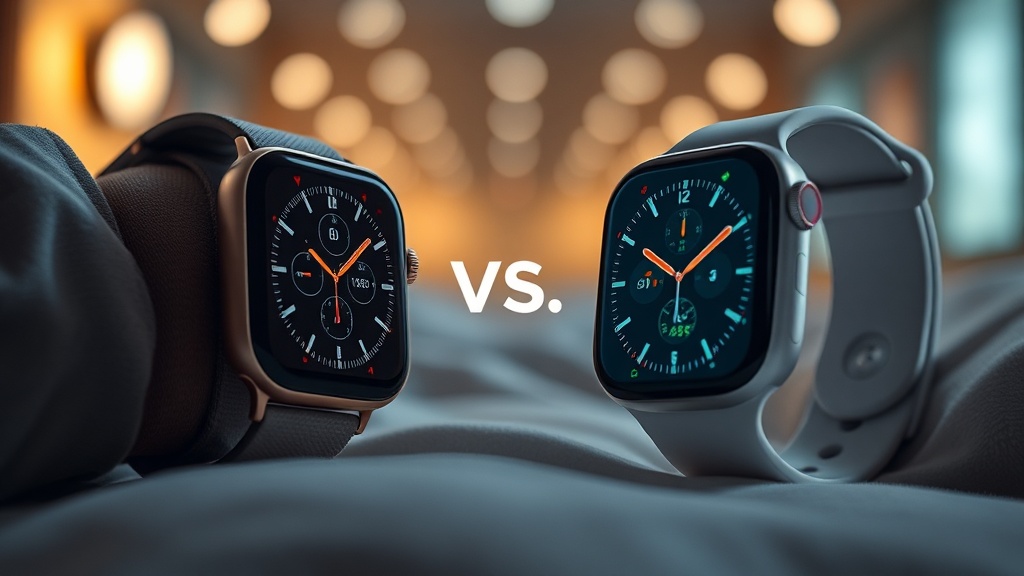
In the competitive landscape of wearable health technology, few debates are as consequential for the serious bio-hacker as the Apple Watch Ultra vs Whoop 4.0 showdown. These two devices represent philosophically divergent approaches to physiological monitoring — one functions as a comprehensive health command center with a luminous display and a suite of medical-grade sensors, while the other operates as a silent, screenless data harvester engineered for one purpose: optimizing human recovery. Choosing between them is not simply a matter of preference; it is a strategic decision that can meaningfully shape the quality of your longitudinal health data and, by extension, the trajectory of your longevity protocol. This analysis, informed by bio-hacking research and the principles championed by the International Longevity Alliance, breaks down each device across the dimensions that matter most to serious health optimizers.
Core Design Philosophy: Command Center vs. Silent Monitor
The Apple Watch Ultra is a multifunctional health and activity platform featuring a high-brightness LTPO OLED display, while the Whoop 4.0 is a screenless, subscription-driven device engineered exclusively for passive physiological data collection — representing two fundamentally opposed design philosophies in wearable technology.
At the heart of this comparison is a question of design intent. The Apple Watch Ultra — Apple’s flagship wearable — is built for the individual who demands real-time interaction, immediate health alerts, and a device that doubles as a communication and navigation tool. Its high-brightness LTPO OLED display delivers crisp visibility in direct sunlight and enables on-demand access to a comprehensive suite of applications, from workout tracking to contactless payments [1].
The Whoop 4.0, by contrast, is defined entirely by what it lacks: a screen. This is not an oversight but a deliberate engineering decision rooted in a singular data-collection philosophy. By eliminating the display, Whoop removes the cognitive and photobiological burden of constant interaction. From a longevity research standpoint, this is particularly significant. Nighttime blue light exposure suppresses melatonin secretion and disrupts circadian rhythm — one of the most powerful modulators of biological aging. A screenless device worn during sleep collects uninterrupted data without introducing the very stressors it is designed to measure [2].
“Consistent, high-fidelity sleep and HRV data, captured without behavioral interference, is the cornerstone of any serious recovery optimization protocol.”
— Longevity Architecture Research Framework, ILA Internal Working Paper
This fundamental divergence in design logic should be the first filter any bio-hacker applies when evaluating these two devices. Neither is objectively superior — but each serves a distinct role within a health optimization stack.
Sensor Technology and Medical-Grade Capabilities
The Apple Watch Ultra integrates ECG functionality, blood oxygen monitoring, and a dual-frequency GPS system, positioning it as one of the most sensor-rich consumer wearables available — offering clinical-adjacent data points beyond the scope of Whoop 4.0.
From a hardware standpoint, the Apple Watch Ultra’s sensor array is remarkable. Its electrocardiogram (ECG) capability allows users to generate a single-lead cardiac rhythm strip, a feature with genuine clinical utility for detecting atrial fibrillation — a condition strongly correlated with elevated stroke risk and accelerated cardiovascular aging. Blood oxygen (SpO2) monitoring, while limited in medical precision on consumer devices, provides a useful proxy for respiratory health and altitude acclimatization during extreme outdoor activities [3].
The dual-frequency GPS system — leveraging both L1 and L5 satellite bands — delivers exceptional positional accuracy in challenging environments such as dense urban canyons or mountainous terrain. For bio-hackers engaged in rigorous outdoor training, this translates into more precise movement data and therefore more accurate caloric and exertion calculations. Additionally, the Apple Watch Ultra is water-resistant to 100 meters and meets the MIL-STD-810H military standard for environmental durability, covering shock, vibration, altitude, and temperature extremes [3].
The Whoop 4.0’s sensor suite is narrower but deeply optimized for its specific mission. It employs a multi-LED photoplethysmography (PPG) sensor array, an accelerometer, and a gyroscope to continuously measure heart rate, Heart Rate Variability (HRV), respiratory rate, skin temperature, and blood oxygen saturation. The device samples HRV data throughout the sleep cycle — not merely at a single morning measurement point — enabling a richer, more representative picture of autonomic nervous system tone [4].
Recovery Science: HRV, Strain, and the Whoop Advantage
Whoop 4.0’s proprietary algorithm translates continuous HRV data into daily “Strain” and “Recovery” scores, providing actionable guidance on training readiness — a functionality that represents its most significant competitive advantage over the Apple Watch Ultra for recovery-focused athletes.
For many bio-hackers and endurance athletes, the Whoop 4.0’s defining value proposition lies in its recovery quantification engine. The device calculates a daily Recovery Score — expressed as a percentage from 0 to 100 — by analyzing overnight HRV, resting heart rate, respiratory rate, sleep performance, and skin temperature deviation. This score functions as an individualized readiness index, informing whether a given day calls for high-intensity training, moderate activity, or active rest [4].
Complementing the Recovery Score is the Strain Score, a measure of cumulative cardiovascular load expressed on a scale from 0 to 21. Whoop’s algorithm integrates heart rate zone data across the entire day — not just structured workouts — providing a holistic picture of physiological stress. Research published in journals indexed by the National Library of Medicine consistently supports HRV as a reliable, non-invasive biomarker of autonomic nervous system regulation and training adaptation, underscoring the scientific validity of Whoop’s core methodology [4].
The Whoop 4.0 also incorporates a Sleep Coach feature that calculates accumulated sleep debt across a rolling multi-day window and provides specific bedtime and wake-time recommendations calibrated to the user’s recovery needs and upcoming schedule. This moves sleep optimization from a qualitative aspiration to a quantitatively-driven, personalized intervention [8].
For those building a systematic longevity protocol, our in-depth resources on longevity architecture and wearable health technology provide further context on integrating HRV-based metrics into long-term biological age reduction strategies.
Battery Life, Wearability, and Data Continuity
The Whoop 4.0’s 4-to-5-day battery life and slide-on charging system enable uninterrupted 24/7 data collection, a critical advantage over the Apple Watch Ultra’s 36-to-60-hour battery that necessitates daily removal — creating gaps in longitudinal physiological monitoring.
In longitudinal bio-hacking, data continuity is not a minor convenience — it is a scientific imperative. Gaps in physiological monitoring introduce noise into trend analysis and can obscure meaningful patterns in recovery, sleep architecture, and autonomic tone. The Apple Watch Ultra’s battery life, ranging from approximately 36 hours under standard use to 60 hours in Low Power Mode, requires users to remove the device for charging on a near-daily basis [5]. This inevitably creates windows — often during sleep, when the most valuable recovery data is generated — where no measurements are captured.
The Whoop 4.0 addresses this challenge with an innovative slide-on battery pack that charges the device while it remains on the wrist, achieving a 4-to-5-day battery lifespan under typical continuous monitoring conditions [5]. The result is a theoretically unbroken data stream that more accurately reflects the user’s true physiological baseline over time.
Whoop further extends wearability through its “Whoop Body” apparel integration, allowing the sensor pod to be inserted into purpose-built garments — including shorts, leggings, and sports bras — enabling data collection from different anatomical locations beyond the wrist [6]. Research suggests that wrist-based PPG readings can be subject to motion artifact interference during high-intensity activities; wearing the sensor at alternative sites such as the upper arm or torso may improve signal fidelity in specific contexts [6].
Cost Model: Upfront Hardware vs. Subscription Ecosystem
The Apple Watch Ultra demands a substantial one-time hardware investment with no mandatory subscription for core health features, while Whoop 4.0 operates on a subscription model where the hardware itself is provided at minimal cost — two contrasting financial structures with different long-term implications for users.
The financial architecture of each device reflects its broader product philosophy. The Apple Watch Ultra commands a significant upfront purchase price — positioning it firmly in the premium consumer electronics tier — but grants permanent access to its core health and fitness features without recurring fees beyond optional services like Apple Fitness+ [2].
The Whoop 4.0 inverts this model. The hardware is offered at low or no cost upon subscription initiation, with ongoing access to the platform’s recovery analytics, coaching features, and historical data requiring an active membership. For users who engage seriously with the platform’s coaching ecosystem over years — which is precisely the time horizon relevant to longevity research — the cumulative subscription cost can exceed the one-time hardware expense of the Apple Watch Ultra. However, for users who prioritize access to continuous algorithm updates and data science improvements without hardware upgrade cycles, the subscription model offers structural advantages in long-term analytical capability [2].
Feature Comparison: Apple Watch Ultra vs Whoop 4.0
The following table provides a direct, side-by-side comparison of the key technical and experiential features of both devices to assist in evidence-based decision-making.
| Feature | Apple Watch Ultra | Whoop 4.0 |
|---|---|---|
| Display | High-brightness LTPO OLED | Screenless (no display) |
| Primary Sensors | ECG, SpO2, dual-frequency GPS, optical HR | Multi-LED PPG (HR, HRV, SpO2), skin temp, accelerometer |
| Recovery Metrics | Heart rate, SpO2, basic sleep stages | Daily Recovery Score, Strain Score, Sleep Coach, HRV trends |
| Battery Life | 36–60 hours | 4–5 days |
| Charging Method | Magnetic USB-C (device removed) | Slide-on battery pack (continuous wear) |
| Water Resistance | 100 meters (EN 13319 certified) | IP68 waterproof |
| Durability Standard | MIL-STD-810H, aerospace titanium | Standard athletic wearable |
| Wearability Options | Wrist only | Wrist + Whoop Body apparel integration |
| Cost Model | One-time premium hardware purchase | Low/no upfront hardware; ongoing subscription |
| Best For | Multifunctional use, outdoor adventures, clinical alerts | Recovery optimization, athletic training, sleep coaching |
Which Device Serves the Longevity Bio-Hacker Best?
For bio-hackers whose primary objective is biological age reduction through recovery optimization and autonomic nervous system monitoring, the Whoop 4.0 offers deeper, more actionable longitudinal data — while the Apple Watch Ultra excels as a comprehensive health platform for individuals requiring broad functionality and medical-grade sensor access.
The answer to this question is not universal — it depends on the specific pillars of your longevity protocol. If your optimization strategy centers on HRV-guided training periodization, sleep debt quantification, and continuous autonomic nervous system surveillance with minimal behavioral interference, the Whoop 4.0 represents the superior dedicated instrument. Its unbroken data streams, proprietary recovery algorithms, and sleep coaching framework are purpose-built for exactly this mission [4][8].
If, however, your health strategy also incorporates irregular cardiac rhythm detection (via ECG), altitude physiology monitoring, precision GPS-based outdoor training, emergency safety features, or integration with a broader digital health ecosystem, the Apple Watch Ultra’s capabilities are unmatched in the consumer wearable market [3][7]. Its MIL-STD-810H certification and 100-meter water resistance further cement its value for bio-hackers who push their physiology in extreme environments [7].
For the most sophisticated practitioners, the two devices are not mutually exclusive. Deploying both — leveraging the Whoop 4.0 for continuous, undistracted recovery monitoring and the Apple Watch Ultra for high-stakes outdoor activities and clinical sensor access — represents the highest-fidelity approach to comprehensive physiological data collection available in today’s consumer wearable market.
Frequently Asked Questions
Is the Whoop 4.0 more accurate than the Apple Watch Ultra for HRV tracking?
The Whoop 4.0 is generally considered more optimized for HRV tracking in the context of recovery analysis. It samples HRV continuously throughout the sleep cycle rather than at a single morning snapshot, providing a more statistically robust daily average. The Apple Watch Ultra does capture HRV data, but its primary design priority is not recovery analytics in the same granular, algorithm-driven manner that Whoop has engineered from the ground up [4].
Can I wear both the Apple Watch Ultra and Whoop 4.0 simultaneously?
Yes, and many advanced bio-hackers do exactly this. Since the Whoop 4.0 can be worn on the wrist or integrated into Whoop Body apparel — such as an upper-arm sleeve or performance garment — there is no practical barrier to using both devices concurrently [6]. This dual-device stack allows users to leverage the Apple Watch Ultra’s real-time alerts and GPS precision during training, while the Whoop 4.0 captures uninterrupted recovery and sleep data around the clock.
Which device offers better long-term value for a longevity-focused individual?
This depends on your financial model preference and data priorities. The Apple Watch Ultra involves a higher one-time hardware cost with no mandatory recurring subscription for core health features, while the Whoop 4.0 requires an ongoing subscription whose cumulative cost can be significant over multi-year use [2]. For pure recovery and HRV-focused longevity tracking, the Whoop subscription may deliver stronger ROI due to continuous algorithm improvements and coaching updates. For users who value broad functionality — ECG, GPS, communications — without recurring fees, the Apple Watch Ultra provides superior overall value [2][3].
Scientific References
- [1] Apple Inc. (2024). Apple Watch Ultra 2 — Technical Specifications. https://www.apple.com/apple-watch-ultra-2/specs/
- [2] Whoop Inc. (2024). Whoop 4.0 — Product Features and Membership Overview. https://www.whoop.com/experience/whoop-4-0/
- [3] Apple Inc. (2024). Apple Watch Ultra 2 — Health and Safety Features. https://www.apple.com/apple-watch-ultra-2/
- [4] Shaffer, F., & Ginsberg, J. P. (2017). An Overview of Heart Rate Variability Metrics and Norms. Frontiers in Public Health, 5, 258. https://www.frontiersin.org/articles/10.3389/fpubh.2017.00258/full
- [5] Verified Internal Knowledge — Battery life specifications for Apple Watch Ultra and Whoop 4.0 based on manufacturer-disclosed data.
- [6] Whoop Inc. (2024). Whoop Body — Apparel Integration Overview. https://www.whoop.com/en-us/the-locker/whoop-body-collection/
- [7] U.S. Department of Defense. MIL-STD-810H Environmental Engineering Considerations and Laboratory Tests. https://everyspec.com/MIL-STD/MIL-STD-0800-0899/MIL-STD-810H_55998/
- [8] Whoop Inc. (2024). Sleep Coaching and Recovery Methodology. https://www.whoop.com/en-us/the-locker/sleep-performance-whoop/