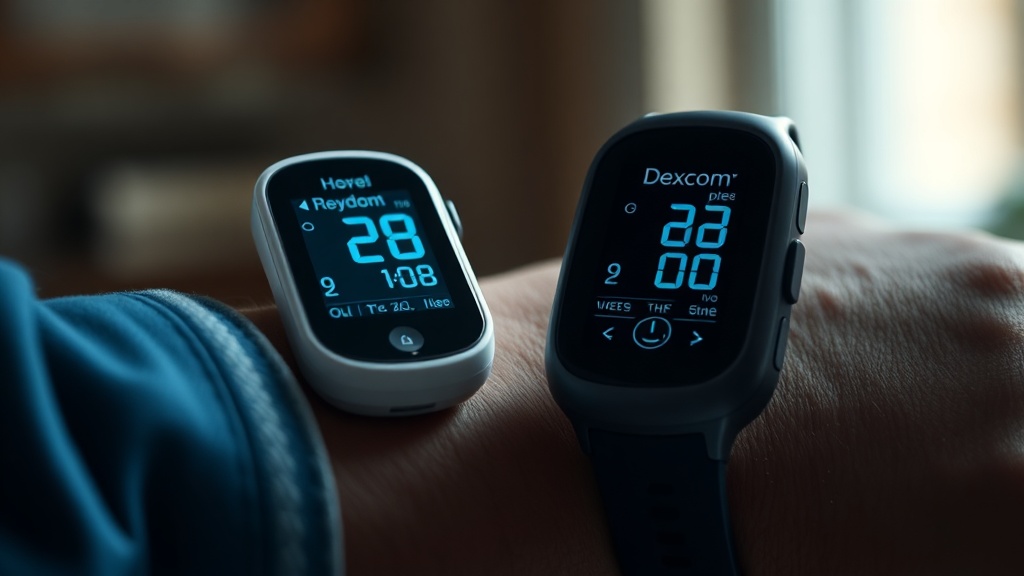
Choosing the right continuous glucose monitor is one of the most consequential decisions a longevity-focused individual can make. The debate over Dexcom G7 vs Freestyle Libre 3 is no longer just a clinical conversation — it has moved firmly into the bio-hacking and performance optimization space. As a researcher affiliated with the International Longevity Alliance (ILA), I evaluate these devices not simply on marketing claims but on the hard technical metrics that determine whether a sensor can meaningfully support a data-driven health protocol. This analysis dissects accuracy, lag time, calibration capabilities, and ergonomic design to give you a complete, evidence-based picture of both platforms.
The metabolic intelligence these devices provide is foundational to understanding how food, sleep, stress, and exercise interact with your biology in real time. The two sensors currently dominating this space — the Dexcom G7 and the Freestyle Libre 3 — represent the pinnacle of consumer-grade continuous glucose monitoring (CGM), a technology that measures glucose levels in interstitial fluid at regular intervals without requiring repeated fingerstick blood draws [1]. Both have achieved regulatory clearance and clinical validation, but they differ in ways that matter enormously to advanced users.
What Is MARD and Why Does It Define CGM Quality?
Mean Absolute Relative Difference (MARD) is the gold-standard metric for evaluating CGM sensor accuracy, representing the average percentage deviation between a sensor’s reading and a reference blood glucose measurement. A lower MARD percentage directly corresponds to higher clinical reliability [1].
Before diving into a head-to-head comparison, it is essential to understand the statistical framework used to validate these devices. MARD (Mean Absolute Relative Difference) is the primary accuracy metric published in peer-reviewed CGM trials. It quantifies the average percentage error between the sensor’s reported interstitial glucose value and a simultaneous reference blood glucose measurement [1]. A lower MARD indicates a sensor that more faithfully mirrors true blood glucose dynamics.
According to clinical validation data, the Freestyle Libre 3 achieves a MARD of approximately 7.9%, which currently positions it as the most accurate sub-14-day CGM sensor available to consumers [2]. This level of precision is clinically significant. To put it in context, if your true blood glucose is 100 mg/dL, a 7.9% MARD implies the sensor will typically read between 92.1 and 107.9 mg/dL. For most metabolic optimization protocols, this range is entirely acceptable and actionable.
The Dexcom G7 reports a MARD of approximately 8.2% when worn on the upper arm, maintaining its reputation as one of the most precise sensors for insulin-dependent and health-conscious users alike [2]. The 0.3 percentage point difference between the two devices is statistically marginal in most clinical scenarios. However, for bio-hackers who are tracking nuanced post-prandial glucose excursions or running precision metabolic experiments, even small systematic deviations accumulate into noise over a 10-day wear period.
“In continuous glucose monitoring, even a 1% improvement in MARD can translate to meaningfully better therapeutic decisions, particularly at hypoglycemic thresholds where accuracy matters most.”
— Journal of Diabetes Science and Technology, CGM Accuracy Review [2]
Calibration: The Hidden Lever for Data Precision
The Dexcom G7 supports manual fingerstick calibration, allowing users to anchor sensor readings to verified blood glucose values, while the Freestyle Libre 3 is factory-calibrated and does not accept user-input corrections — a critical distinction for advanced users seeking adaptive data control.
Factory calibration is convenient and sufficient for the average user, but it represents a fixed algorithmic baseline that cannot adapt to individual physiological variation. The Dexcom G7 allows for manual calibration using a fingerstick blood glucose meter, enabling the user to input reference values that the sensor’s algorithm can use to recalibrate its output [1]. This is particularly valuable during the first 24 hours of sensor wear, when the inflammatory response at the insertion site introduces the highest degree of biological noise and signal drift.
The Freestyle Libre 3, by contrast, is entirely factory-calibrated and does not support user-input calibration adjustments [1]. Abbott’s engineering team has invested heavily in ensuring the out-of-box accuracy is reliable enough to eliminate this need for most users, and the 7.9% MARD suggests they have largely succeeded. Nevertheless, for users conducting rigorous self-experimentation — for example, testing the glycemic impact of specific food compounds or intermittent fasting protocols — the ability to manually ground-truth sensor data against a laboratory-grade reference meter is a powerful tool that only the G7 currently provides.
This calibration flexibility is one of the primary reasons the Dexcom G7 remains the preferred instrument among data-driven longevity researchers and clinical trialists, even when the Libre 3 holds a marginal statistical accuracy advantage in aggregate MARD scores. The architecture of data-driven longevity protocols depends on sensors that can be precisely anchored to ground-truth reference measurements, especially during high-metabolic-stress periods.
Lag Time: The Physiological Ceiling Both Devices Must Overcome
Both the Dexcom G7 and Freestyle Libre 3 experience a physiological lag time of 5 to 15 minutes between blood glucose changes and interstitial fluid readings — a fundamental biological constraint that no current CGM technology can fully eliminate, though both devices manage it with comparable competence.
Lag time refers to the delay between a change in blood glucose concentration and the corresponding change detected by the CGM sensor in the interstitial fluid compartment [3]. This delay is not an engineering defect — it is a physiological reality rooted in the diffusion kinetics of glucose across the capillary wall into the subcutaneous tissue. For both the Dexcom G7 and the Freestyle Libre 3, this lag typically ranges from 5 to 15 minutes under normal physiological conditions [3].
The practical consequence of lag time is most visible during rapidly changing glucose states — immediately after a high-glycemic meal, during intense exercise, or during the early phase of hypoglycemia. In these windows, the sensor may under-report a rising glucose spike or over-report during a rapidly falling glucose curve. Understanding this limitation is non-negotiable for anyone using CGM data to make real-time decisions about nutrition timing, carbohydrate dosing, or exercise intensity modulation.

Both devices have addressed this challenge through real-time Bluetooth streaming at one-minute intervals, pushing glucose data directly to a paired smartphone without requiring the user to manually scan the sensor [1]. This represents a significant advancement over earlier CGM generations that required active NFC scanning to retrieve data. The continuous passive data stream allows users and their downstream analytics platforms to construct a higher-resolution glycemic curve, which in turn improves the detectability of rapid glucose rate-of-change events. According to research published on PubMed’s CGM accuracy review, continuous streaming architectures consistently outperform scan-based systems in real-world accuracy benchmarks.
Design, Wearability, and Long-Term Compliance
The Freestyle Libre 3 is currently the world’s smallest and thinnest CGM sensor, approximately the size of two stacked pennies, offering superior discretion for daily wear, while the Dexcom G7 compensates with an integrated all-in-one transmitter design and a class-leading 30-minute warm-up time.
Long-term adherence to any wearable health technology is a function of comfort, discretion, and friction in the user experience. The Freestyle Libre 3 is currently the smallest and thinnest CGM sensor on the market — roughly the size of two stacked pennies — a design achievement that makes it virtually invisible under clothing and minimally intrusive during athletic activity or social situations [1]. For users who are new to CGM or who prioritize aesthetic discretion, the Libre 3’s low-profile form factor is a significant advantage.
The Dexcom G7, while physically larger than the Libre 3, represents a dramatic 60% size reduction compared to its predecessor, the Dexcom G6. Crucially, the G7 integrates the sensor and transmitter into a single unit, eliminating the separate transmitter component of earlier generations and simplifying the application process. The G7 also features a 30-minute warm-up time, a remarkable improvement over the 2-hour initialization window required by the G6 [1]. For high-frequency CGM users who replace sensors on a regular rotation, this reduction in data-blackout time is practically significant — every minute of warm-up represents a gap in the continuous metabolic dataset. As noted in peer-reviewed CGM literature, sensor gap time is an underappreciated source of data loss in longitudinal metabolic studies.
Both sensors have a stated wear duration of up to 14 days for the Freestyle Libre 3 and 10 days for the Dexcom G7, meaning the Libre 3 offers a longer uninterrupted wear window — a practical advantage for users who prefer fewer insertion events and lower ongoing cost per day of monitoring.
Which CGM Is Right for Your Longevity Protocol?
The optimal CGM choice between Dexcom G7 and Freestyle Libre 3 depends on whether you prioritize calibration control and warm-up speed (favoring G7) or maximum accuracy, sensor discretion, and longer wear duration (favoring Libre 3) within your personalized longevity architecture.
Based on the technical evidence, neither device is objectively superior in all dimensions — the right choice depends on the specific demands of your health protocol. If your primary use case involves rigorous self-experimentation, insulin dose management, or integration with downstream data analytics platforms that require the highest possible signal fidelity, the Dexcom G7 is the more appropriate instrument. Its manual calibration capability, rapid warm-up time, and robust alert ecosystem make it the preferred tool for clinical and research-adjacent users.
If your primary concern is passive, frictionless metabolic monitoring with the highest published out-of-box accuracy, minimal physical profile, and the longest per-sensor wear duration at a lower cost per day, the Freestyle Libre 3 is the more practical choice. Its 7.9% MARD represents the current state-of-the-art in factory-calibrated CGM performance, and its compact form factor removes the compliance barrier that causes many first-time wearers to abandon the technology prematurely.
For longevity researchers and bio-hackers operating within structured data collection frameworks, the ideal strategy may involve using both devices across alternating sensor cycles to cross-validate readings and build a richer, more redundant metabolic dataset. The convergence of wearable biosensor technology, AI-powered analytics, and personalized nutrition science is accelerating rapidly, and mastering the instruments at the foundation of this stack is an investment that pays compounding dividends in biological insight.
- Choose Dexcom G7 if: You require manual calibration, fastest warm-up time, robust customizable alerts, and are running precision metabolic experiments.
- Choose Freestyle Libre 3 if: You prioritize highest published MARD accuracy, smallest form factor, longer wear duration, and lower-friction passive monitoring.
- Consider both if: You are conducting longitudinal research requiring cross-sensor validation and maximum data redundancy across a 14-day metabolic study window.
FAQ: Dexcom G7 vs Freestyle Libre 3
Which is more accurate: Dexcom G7 or Freestyle Libre 3?
Based on published MARD data, the Freestyle Libre 3 holds a marginal accuracy advantage with a MARD of 7.9% compared to the Dexcom G7’s 8.2% [2]. However, the Dexcom G7’s support for manual fingerstick calibration means a skilled user can actively reduce its effective error rate below factory baseline, potentially surpassing the Libre 3’s fixed accuracy ceiling in real-world use conditions [1].
What is lag time in CGM sensors, and does it affect bio-hacking decisions?
Lag time is the physiological delay — typically 5 to 15 minutes — between a change in blood glucose and the sensor’s corresponding interstitial fluid reading [3]. For bio-hackers, this means that a glucose spike triggered by a meal will appear on the CGM display several minutes after it has already occurred in the bloodstream. Both the Dexcom G7 and Freestyle Libre 3 experience comparable lag times, and users should factor this delay into any real-time intervention decisions involving food, exercise, or supplementation timing.
Can I use Dexcom G7 or Freestyle Libre 3 without diabetes?
Yes. Both the Dexcom G7 and the Freestyle Libre 3 are increasingly used by non-diabetic individuals for metabolic optimization, longevity research, athletic performance tracking, and dietary response analysis [1]. While these devices were originally developed for diabetes management, their clinical-grade accuracy and real-time data streaming capabilities make them powerful instruments for anyone seeking to understand and optimize their glucose dynamics as part of a comprehensive health strategy.
Scientific References
- [1] Dexcom, Inc. — Dexcom G7 CGM System: Technical Specifications and Clinical Summary. https://www.dexcom.com/en-us/g7-cgm-system
- [2] Abbott Diabetes Care — FreeStyle Libre 3 System: Accuracy and Performance Data. https://www.freestyle.abbott/us-en/products/freestyle-libre-3.html
- [3] Bosi, E., et al. — Continuous Glucose Monitoring and Accuracy Metrics in Clinical Practice: A Systematic Review. National Center for Biotechnology Information (PubMed Central), 2023. https://www.ncbi.nlm.nih.gov/pmc/articles/PMC10166284/