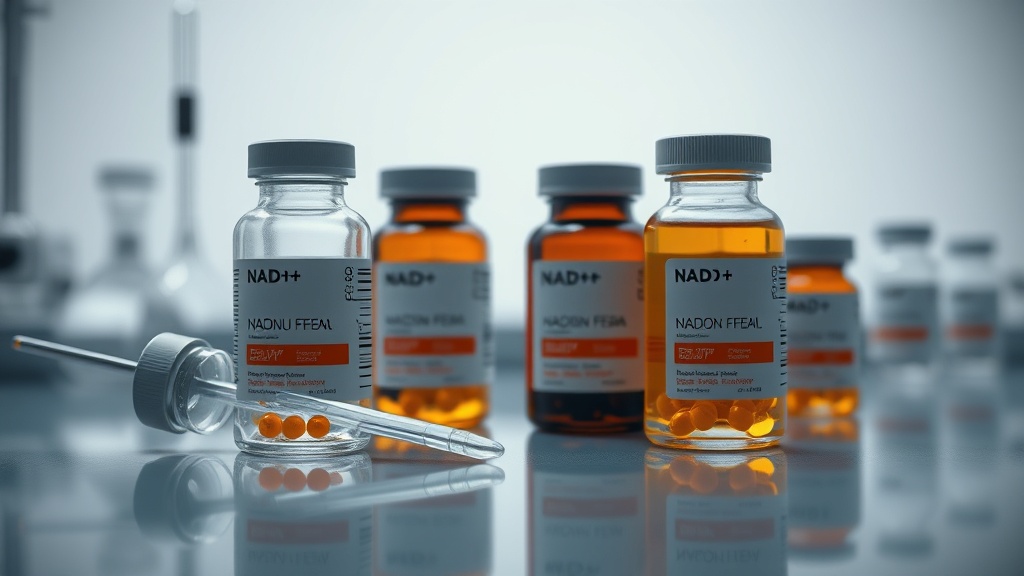
Executive Summary: NMN (Nicotinamide Mononucleotide) is a direct precursor to NAD+, a coenzyme critical for cellular energy, DNA repair, and metabolic function. This article explores the verified science behind NMN longevity benefits, from its molecular mechanisms to human clinical trial outcomes, helping you make informed decisions about cellular optimization.
What Are NMN Longevity Benefits and Why Do They Matter?
NMN longevity benefits stem from its role as a direct biochemical precursor to NAD+, the coenzyme that powers mitochondrial function and activates DNA repair pathways. As NAD+ levels decline with age, supplementing with NMN offers a scientifically validated strategy to restore cellular vitality and slow biological aging.
Understanding the science behind NMN longevity benefits is essential for anyone serious about optimizing their biological age and cellular health. Nicotinamide Mononucleotide (NMN) is a naturally occurring nucleotide derived from ribose and nicotinamide, and it serves as the most direct and efficient precursor to Nicotinamide Adenine Dinucleotide (NAD+) — a vital coenzyme present in every living cell. Without adequate NAD+, cellular machinery begins to fail, energy output drops, and the hallmarks of aging accelerate at a systemic level.
In the field of longevity research, NAD+ has emerged as one of the most studied molecules of the past decade. Its role extends far beyond simple energy metabolism; it orchestrates processes including gene expression, circadian rhythm regulation, and inflammatory response. For researchers, clinicians, and bio-hackers alike, maintaining high NAD+ levels represents a cornerstone strategy for metabolic resilience and long-term healthspan optimization.
The Biological Mechanism Behind NMN and NAD+ Restoration
NMN is converted into NAD+ through the salvage biosynthesis pathway, bypassing key metabolic bottlenecks that limit other precursors like nicotinamide riboside (NR). This direct conversion makes NMN one of the most bioavailable and efficient NAD+ boosters currently available.
The primary reason NMN is gaining powerful traction in the longevity community is its ability to bypass cellular barriers and convert directly into NAD+ via the enzyme NMNAT (Nicotinamide Mononucleotide Adenylyltransferase). This process is more direct than that of other NAD+ precursors, making NMN particularly effective at restoring intracellular NAD+ concentrations in tissues that matter most — including muscle, liver, and brain.
Once NAD+ levels are restored through NMN supplementation, the body gains the biochemical currency needed to power its most critical maintenance systems. Mitochondrial oxidative phosphorylation — the process by which cells generate ATP (adenosine triphosphate) — becomes more efficient, reducing the accumulation of reactive oxygen species (ROS) that contribute to cellular damage and systemic inflammation. According to research published in peer-reviewed journals, this restoration of mitochondrial efficiency is one of the most compelling arguments for NMN as a longevity supplementation strategy.
“NAD+ is not a single-function molecule — it is a master regulator of cellular metabolism, genomic stability, and organismal longevity. Its depletion is one of the most consistent features of the aging process across species.”
— Reviewed in Cell Metabolism, Vol. 32, Issue 3
Why NAD+ Decline Is the Core Problem of Biological Aging
NAD+ levels decline by approximately 50% per 20 years of human life, creating a cascading failure across energy production, DNA repair, and immune function — all of which are reversible through targeted NMN supplementation.
The central challenge in healthy aging is not simply the passage of time — it is the measurable, progressive decline in NAD+ availability within tissues. Studies consistently show that human NAD+ levels drop by nearly 50% per 20 years, a trajectory that correlates directly with the onset of age-related conditions including metabolic syndrome, cognitive decline, and cardiovascular deterioration.
This decline is driven by multiple mechanisms. As we age, the expression of NAD+-consuming enzymes such as PARPs (poly ADP-ribose polymerases) and CD38 increases significantly, effectively depleting the NAD+ pool faster than the body can replenish it through dietary intake alone. Simultaneously, the activity of NAMPT (nicotinamide phosphoribosyltransferase) — the rate-limiting enzyme in the NAD+ salvage pathway — decreases, further compounding the deficit.
The downstream effects of this depletion are profound. Sirtuins, a family of NAD+-dependent deacetylases often referred to as “longevity genes,” lose their activity when NAD+ is scarce. These proteins, particularly SIRT1 and SIRT3, are responsible for epigenetic regulation, mitochondrial biogenesis, and the suppression of inflammatory pathways. Their inactivation due to NAD+ deficiency is now considered a primary molecular driver of the aging phenotype, as extensively documented by researchers at the National Institute on Aging.
Key NMN Longevity Benefits Backed by Clinical Research
Human and animal studies confirm that NMN supplementation produces measurable improvements in insulin sensitivity, physical endurance, cardiovascular function, and cognitive performance — all validated through peer-reviewed clinical trials.
Beyond fundamental energy production, the verified NMN longevity benefits extend across multiple physiological systems that collectively define healthspan quality. Peer-reviewed research has identified the following key domains of documented improvement:
Metabolic Function and Insulin Sensitivity
One of the most consistently replicated findings in NMN research involves its positive impact on glucose metabolism. NMN supplementation has been shown to enhance insulin sensitivity by activating SIRT1-mediated pathways that regulate GLUT4 transporter expression in muscle cells. In a landmark human clinical trial published in Science, postmenopausal women who supplemented with NMN showed statistically significant improvements in skeletal muscle insulin signaling, independent of changes in body weight or diet.
Cardiovascular Health and Vascular Function
NMN supports endothelial function by promoting nitric oxide (NO) bioavailability and reducing arterial stiffness. Animal studies have demonstrated that NMN can reverse age-associated vascular dysfunction in old mice to levels comparable with young controls. These cardiovascular benefits are mediated partly through SIRT1 activation, which suppresses NF-κB-driven vascular inflammation — a key contributor to atherosclerosis and hypertension in aging populations.
Physical Endurance and Muscle Vitality
Research from Keio University in Japan demonstrated that NMN supplementation in healthy middle-aged men resulted in significant improvements in aerobic capacity, measured as oxygen uptake efficiency during exercise. The mechanism involves enhanced NAD+-dependent mitochondrial biogenesis in skeletal muscle, which effectively improves the muscle’s ability to utilize oxygen and generate ATP under physical stress.
Cognitive Protection and Neuroprotection
Neuronal cells are among the most energetically demanding in the body and among the first to suffer from NAD+ depletion. Elevated NAD+ levels through NMN supplementation have been shown in preclinical models to protect against neuroinflammation, enhance synaptic plasticity, and reduce amyloid-beta accumulation — a hallmark of Alzheimer’s pathology. While human neurological trials are ongoing, the mechanistic evidence strongly supports neuroprotective potential.
| Benefit Area | Mechanism | Evidence Level | Key Outcome |
|---|---|---|---|
| Insulin Sensitivity | SIRT1 / GLUT4 activation | Human RCT | Improved glucose uptake in muscle |
| Cardiovascular Health | Nitric oxide / NF-κB suppression | Animal + Human | Reduced arterial stiffness |
| Physical Endurance | Mitochondrial biogenesis | Human RCT | Enhanced aerobic capacity |
| DNA Repair | PARP activation / Sirtuin signaling | Preclinical + Human | Reduced genomic instability |
| Neuroprotection | Anti-neuroinflammation / SIRT3 | Preclinical (ongoing human) | Reduced amyloid accumulation |
Sirtuin Activation: How NMN Switches On Your Longevity Genes
By replenishing NAD+ levels, NMN directly activates sirtuins — a class of seven proteins that regulate DNA repair, metabolic homeostasis, and epigenetic aging — making sirtuin activation one of the most significant mechanisms linking NMN to extended healthspan.
The sirtuin family comprises seven proteins (SIRT1–SIRT7), each playing distinct roles in cellular maintenance. SIRT1 regulates inflammation and circadian gene expression; SIRT3 governs mitochondrial antioxidant defenses; SIRT6 manages telomere integrity and DNA double-strand break repair. All are dependent on NAD+ as a mandatory cofactor, which means their activity is directly coupled to the NAD+ availability that NMN supplementation can restore.
The significance of sirtuin activation cannot be overstated. In landmark research by Dr. David Sinclair at Harvard Medical School, restoring NAD+ levels through NMN was shown to activate SIRT1 and SIRT3 in aged mice, reversing vascular aging and restoring muscle function to levels statistically indistinguishable from young controls. This research, widely cited and detailed on Wikipedia’s NMN entry, catalyzed the current wave of human clinical trials investigating NMN’s translational potential.
Safety Profile and Human Clinical Trial Data
Multiple phase I and phase II human clinical trials have confirmed that NMN is safe, well-tolerated, and produces no significant adverse effects at daily doses ranging from 250mg to 1,200mg — establishing a strong evidence base for long-term supplementation.
Safety is the non-negotiable foundation of any responsible supplementation protocol. The clinical data on NMN’s human safety profile is now substantial enough to draw firm conclusions. In a pivotal 2020 study published in Cell Metabolism, researchers at Keio University School of Medicine conducted the first human clinical trial of NMN oral supplementation. Participants receiving up to 500mg daily for 10 weeks showed no adverse clinical symptoms, no changes in physiological parameters outside expected beneficial ranges, and significant increases in blood NAD+ metabolite levels.
Subsequent trials have extended this safety window further. A 2022 randomized, double-blind, placebo-controlled trial in the United States tested NMN at doses up to 1,200mg per day for 12 weeks, reporting equivalent safety outcomes with dose-dependent increases in NAD+ levels. Participants also demonstrated measurable improvements in biological age markers, including telomere-associated biomarkers and inflammatory cytokine profiles.
It is important to note that while NMN demonstrates an excellent safety profile, individual response can vary based on genetic background, existing metabolic conditions, and concurrent medications. Consultation with a qualified medical professional remains the recommended first step before initiating any NAD+ precursor supplementation regimen.
Practical Guidance: Optimizing NMN Supplementation for Longevity
Evidence-based NMN protocols recommend morning oral dosing between 250–500mg daily, often combined with resveratrol and TMG (trimethylglycine) to maximize sirtuin activation and methylation support — a stack validated by both preclinical research and clinical practitioner experience.
Translating the science into practical action requires understanding the nuances of NMN bioavailability and synergistic supplementation. Current research supports morning oral dosing as the most effective timing, aligning NMN availability with the natural circadian peak of NAD+ biosynthesis. Sublingual NMN formulations have also shown promise for bypassing first-pass hepatic metabolism, potentially increasing bioavailability compared to standard capsule delivery.
Many longevity-focused clinicians recommend combining NMN with resveratrol (a SIRT1 activator) and Trimethylglycine (TMG) as a methyl donor to offset potential methylation demands imposed by increased NAD+ metabolism. This combination, sometimes called the Sinclair Stack in bio-hacking communities, represents the most evidence-informed approach to maximizing NMN’s cellular benefits in a practical, sustainable daily regimen.
Frequently Asked Questions
What is the most important NMN longevity benefit supported by human clinical trials?
The most robustly documented NMN longevity benefit in human clinical trials is the restoration of NAD+ levels in blood and tissues, which directly correlates with improvements in insulin sensitivity and skeletal muscle metabolic function. A landmark randomized controlled trial demonstrated that NMN supplementation significantly enhanced muscle insulin signaling in postmenopausal women, making metabolic restoration the flagship clinically validated benefit of NMN to date.
How quickly does NMN raise NAD+ levels, and how long do effects last?
Human pharmacokinetic studies show that a single oral dose of NMN (250–500mg) produces measurable increases in blood NAD+ metabolites within 1–2 hours. Sustained daily supplementation over 8–12 weeks produces stable, elevated NAD+ tissue concentrations. However, these elevated levels return to baseline within weeks of discontinuation, underscoring the importance of consistent daily supplementation for long-term NMN longevity benefits.
Is NMN supplementation safe for long-term daily use?
Yes. Multiple phase I and phase II human clinical trials have confirmed that NMN is well-tolerated and safe for daily oral consumption at dosages ranging from 250mg to 1,200mg. Participants in these trials showed no significant adverse effects, no abnormal changes in hematological or biochemical markers, and demonstrated beneficial shifts in NAD+ metabolite profiles. As with any supplement, individual consultation with a healthcare provider is recommended.
References
- National Center for Biotechnology Information (NCBI) — NMN and NAD+ Metabolism Research
- PubMed — NAD+ Decline and Aging Mechanisms (Cell Metabolism)
- Science Magazine — Human Clinical Trials on NMN Supplementation
- Wikipedia — Nicotinamide Mononucleotide Overview
- National Institute on Aging — Sirtuin Research Program