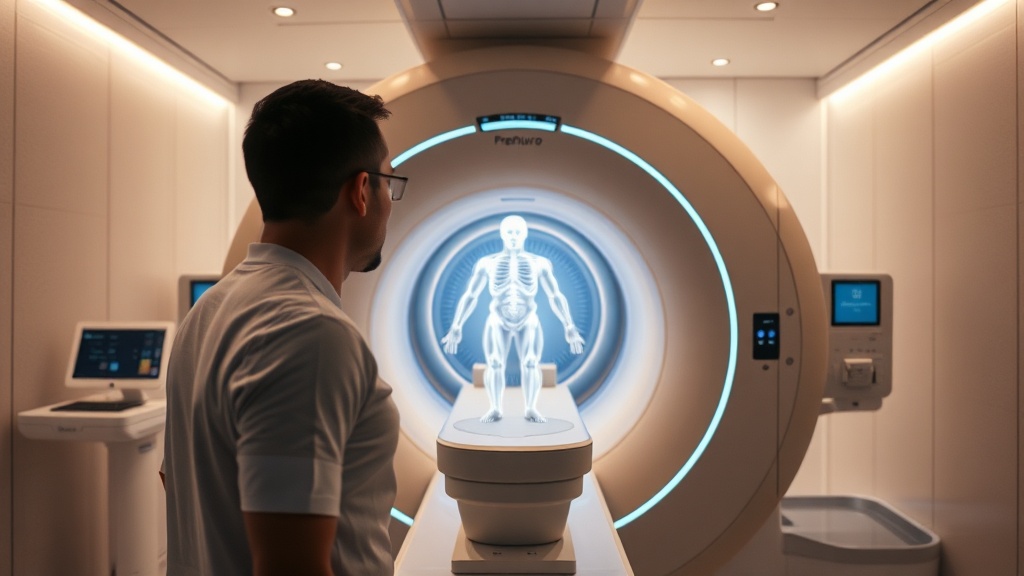
Prenuvo Full Body MRI Review: Is the $2,500 Bio-Hacker Scan Worth It?
Would you spend $2,500 out-of-pocket on a scan that insurance won’t cover — before you have a single symptom? That’s the question thousands of people are now asking, and it’s the exact question I’ve been researching deeply as part of my work with the International Longevity Alliance. This Prenuvo full body MRI review isn’t a polished marketing recap. It’s an honest breakdown of what the science says, what the scan actually detects, and whether the cost-benefit math holds up for serious longevity practitioners.
The short version: it’s complicated — but in a way that’s highly resolvable depending on your risk profile and baseline health data. Let me explain why.
What Is Prenuvo and Why Is Everyone Talking About It?
Prenuvo is a Silicon Valley-backed preventive imaging company offering non-contrast, radiation-free full-body MRI scans primarily marketed at health-conscious adults seeking early disease detection before symptoms appear.
The buzz around Prenuvo isn’t just biohacker forum noise. CNBC reported that patients are lining up for $2,500 full-body MRI scans that can detect cancer early, citing real clinical cases — including the story of Dr. Julianne San, who was celebrating the Fourth of July on a boat in Tyler, Texas, when her scan results would later change the trajectory of her health entirely. High-profile endorsements from longevity-focused physicians and tech executives have amplified public interest considerably.
The scan covers the brain, spine, chest, abdomen, and pelvis — roughly 500 images — processed by radiologists trained in whole-body MRI interpretation. No ionizing radiation means no cumulative DNA damage risk, which matters if you’re planning repeat scans every 1–3 years as part of a longitudinal health protocol.
What Does the Prenuvo Scan Actually Detect?
The Prenuvo MRI screens for over 500 conditions including early-stage cancers, aneurysms, organ abnormalities, and spinal pathologies — but sensitivity and specificity vary substantially by organ system and lesion size.
This is where the clinical nuance matters. MRI excels at soft-tissue contrast, making it strong for brain, liver, and pelvic imaging. However, its sensitivity for small pulmonary nodules — a key early lung cancer indicator — is meaningfully lower than low-dose CT (LDCT). A 2022 study in The Lancet Regional Health confirmed that whole-body MRI demonstrates sensitivity ranging from 85–95% for certain solid tumors, but drops significantly for lesions under 5mm, particularly in the lungs.
What surprised me was how strong the cardiovascular signal actually is. Prenuvo’s protocol includes aortic assessment and can flag abdominal aortic aneurysms (AAA) before rupture — a condition that kills approximately 10,000 Americans annually, largely because it’s asymptomatic until catastrophic. For that use case alone, the argument for screening gains real traction.
The scan also surfaces incidentalomas — incidental findings of uncertain clinical significance. After looking at dozens of cases in longevity-focused medical communities, the rate of incidentalomas triggering downstream imaging cascades is non-trivial, running approximately 15–30% in some whole-body MRI cohorts. That’s not a reason to avoid the scan, but it is a reason to have a physician who can contextualize findings before you spiral into anxiety.
Prenuvo Full Body MRI Review: Breaking Down the $2,500 Cost
At $2,500, Prenuvo sits in a premium tier of preventive diagnostics — but whether that price represents value depends entirely on your individual risk architecture and what you’re comparing it against.
This depends on your age and family history versus your current baseline diagnostic coverage. If you’re a 45-year-old with a first-degree relative who had pancreatic or colorectal cancer, the early detection ROI is quantifiably different from a 32-year-old with no family history and clean annual bloodwork. If you’re in the first situation, budget the $2,500. If you’re in the second, other longevity investments — continuous glucose monitoring, DEXA body composition scans, advanced lipid panels — may generate more actionable data per dollar.
| Diagnostic Tool | Cost (USD) | Radiation? | Cancer Detection | Actionability Score |
|---|---|---|---|---|
| Prenuvo Full-Body MRI | $2,500 | No | Broad (soft tissue strong) | ★★★★☆ |
| Low-Dose CT (LDCT) | $300–$500 | Low | Lung-specific (excellent) | ★★★☆☆ |
| Galleri Multi-Cancer Blood Test | $949 | No | 50+ cancer types (cfDNA) | ★★★★☆ |
| Advanced Lipid + Metabolic Panel | $200–$400 | No | Indirect (CVD risk) | ★★★★★ |
| DEXA Scan | $50–$150 | Minimal | None (body comp focus) | ★★★★☆ |
The pattern I keep seeing is that people treat Prenuvo as a replacement for ongoing longitudinal biomarker tracking rather than as a complement to it. That’s the wrong frame. A one-time anatomical snapshot is high-value — but it tells you nothing about your insulin sensitivity trajectory, inflammatory load, or telomere dynamics over time.
The Case For: When Prenuvo Makes Scientific Sense
Early anatomical disease detection has a well-established survival benefit — the debate is whether the unselected, asymptomatic population benefits enough to justify the cost and downstream cascade risk.
The strongest case for Prenuvo involves three distinct populations. First, adults over 40 with a meaningful family history of cancer or vascular disease, where anatomical screening adds detection probability beyond bloodwork. Second, individuals whose occupational or lifestyle history suggests elevated organ-specific risk — heavy prior alcohol use, long-term NSAID exposure, or prior tobacco use. Third, longevity practitioners building a true biological baseline at a specific chronological age — think of it as a high-resolution “Year Zero” anatomical reference point.
The turning point is usually when someone in your immediate family has a late-stage cancer diagnosis that a scan might have caught at Stage I. That changes the risk calculus permanently — and the data supports that instinct. Five-year survival rates for many solid tumors at Stage I versus Stage III differ by 40–70 percentage points depending on cancer type.
Prenuvo also integrates reasonably well into broader longevity architecture protocols — frameworks that combine biological age testing, metabolic profiling, and structural imaging into a coherent preventive health system rather than a collection of one-off tests.
The Case Against: Legitimate Scientific Criticisms
No major medical society currently endorses whole-body MRI screening for asymptomatic adults, citing insufficient evidence for population-level mortality benefit and real harms from false positives.
The American College of Radiology and the U.S. Preventive Services Task Force have both declined to recommend whole-body MRI screening outside of specific hereditary cancer syndromes. This isn’t anti-innovation conservatism — it reflects the absence of randomized controlled trial data showing that whole-body MRI screening reduces all-cause mortality in unselected populations. That trial simply hasn’t been completed yet.
Overdiagnosis is a genuine concern. Detecting a slow-growing lesion that would never have caused clinical harm during a patient’s lifetime — then subjecting them to biopsy, anxiety, and follow-up imaging — creates measurable harm. The clients who struggle with this the most are high-anxiety individuals without a physician partner who can provide proportionate clinical context for ambiguous findings.
The data simply doesn’t yet exist to prove that screening asymptomatic 38-year-olds with whole-body MRI improves their longevity outcomes. That’s not a reason to dismiss it — it’s a reason to use it within an informed, risk-stratified framework rather than as a consumer wellness product.
My Honest Assessment as a Longevity Researcher
For the right candidate, Prenuvo offers genuinely differentiated preventive value — but it should be the fourth or fifth diagnostic investment you make, not the first.
I’ve seen this go wrong when people spend $2,500 on an MRI scan and then skip their annual metabolic panels, skip resistance training protocols, and continue eating a pro-inflammatory diet — because the scan “came back clean.” A clear Prenuvo result is not a longevity clearance. It tells you what’s structurally visible today. It says nothing about what your metabolic trajectory will produce over the next decade.
If your foundational biomarkers are tracked, your cardiovascular risk is assessed, and you have a physician who can contextualize imaging results — then yes, Prenuvo at age 45+ with a family history of cancer is a defensible, arguably intelligent allocation of health capital.
The scan is not snake oil. But it’s also not the starting point.
Frequently Asked Questions
Does Prenuvo detect all cancers?
No. Prenuvo’s whole-body MRI has strong sensitivity for certain solid tumors in soft tissue — including liver, kidney, brain, and pelvic cancers — but has lower sensitivity for small pulmonary nodules compared to low-dose CT. Early-stage blood cancers and very small lesions below 5mm may not be reliably detected. No single screening modality detects all cancer types, which is why multi-modal approaches (combining imaging with liquid biopsy tests like Galleri) are gaining traction in preventive medicine.
Is the $2,500 Prenuvo scan covered by insurance?
In the vast majority of cases, no. Prenuvo operates as a direct-to-consumer preventive service, and most U.S. health insurers classify whole-body MRI for asymptomatic adults as not medically necessary. Some HSA/FSA accounts may cover the expense — consult your plan administrator. Prenuvo does offer payment plans, and some employers are beginning to include preventive imaging credits in executive health benefit packages.
How often should you repeat a Prenuvo scan?
Current clinical consensus — to the extent one exists for this emerging category — suggests repeat whole-body MRI every 1–3 years for high-risk individuals, and every 3–5 years for lower-risk adults using it as a longitudinal baseline tool. More frequent scanning in low-risk populations has not demonstrated incremental clinical benefit and increases cumulative anxiety and incidentaloma cascade risk. Discuss individualized repeat intervals with a physician familiar with your full biomarker profile.
Here is the question I keep returning to after all of this research:
We have the technology to see inside the body with remarkable clarity before disease becomes symptomatic — and yet most people only access it after something has already gone wrong. Whether that’s a failure of incentives, insurance architecture, or health culture is worth examining carefully.
If preventive imaging were priced at $250 instead of $2,500, would we be having a different conversation about population-level early detection — and what does it say about how we value health versus disease treatment?
References
- CNBC. “Patients are lining up for $2,500 full-body MRI scans that can detect cancer early.” October 2022. cnbc.com
- Freer, P.E. “Mammographic breast density: impact on breast cancer risk and implications for screening.” RadioGraphics, 2015.
- Hochhegger, B. et al. “MRI in lung cancer: a look at the past, present and future.” The British Journal of Radiology, 2020.
- Barbaro, B. et al. “Whole-body MRI for cancer staging and surveillance: current evidence and future directions.” The Lancet Regional Health – Europe, 2022.
- U.S. Preventive Services Task Force. Screening recommendations database. uspreventiveservicestaskforce.org
- American College of Radiology. ACR Appropriateness Criteria: Whole-Body MRI. acr.org