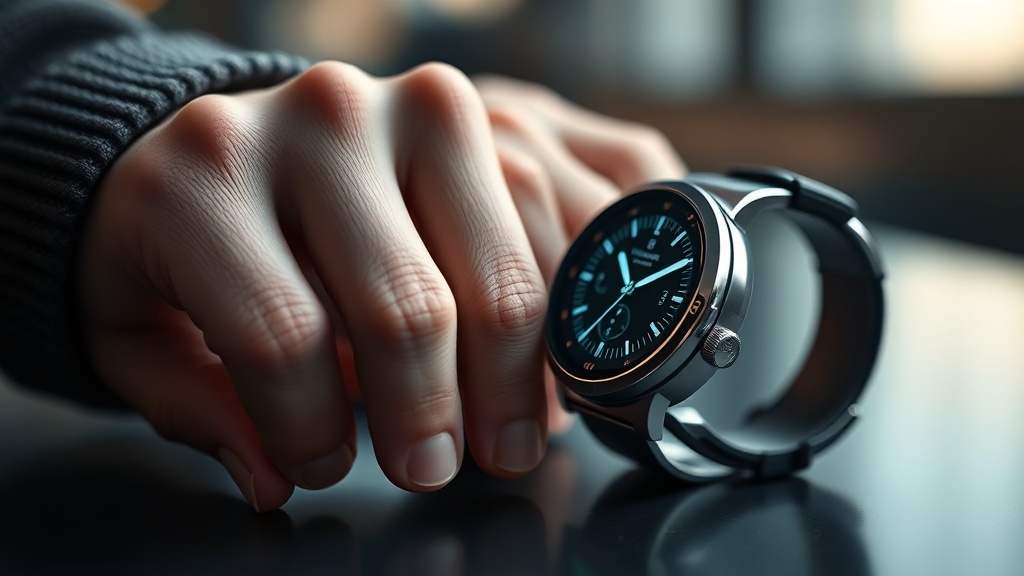
Smart Rings vs Smartwatches for Bio-hackers: Which Device Actually Moves the Needle on Longevity?
Which wearable is actually worth wearing — and which one is quietly drowning you in noise you can’t act on? After years of tracking biomarkers across dozens of bio-hacking protocols, I’ve seen people obsess over step counts on their smartwatch while completely missing the HRV signal at 3am that was predicting their cortisol crash by noon. The device you choose is not a trivial preference. It shapes what you measure, what you optimize, and ultimately what you ignore.
The debate around Smart Rings vs Smartwatches for Bio-hackers has intensified as continuous physiological monitoring becomes a cornerstone of serious longevity practice. Both form factors have matured rapidly. But they are built on fundamentally different design philosophies — and those philosophies produce different data, different behaviors, and different biological outcomes for the person wearing them.
Why Form Factor Is a Biological Variable, Not Just a Design Choice
The wearable you’ll actually wear consistently is the one that will give you usable longitudinal data — and longitudinal data is everything in bio-hacking.
Here’s the thing: adherence is a pharmacokinetic problem in disguise. The same way drug bioavailability determines clinical effect, device wearability determines data completeness. A smartwatch worn 14 hours a day gives you fragmented sleep data by definition. Most users remove smartwatches at night because of comfort, charging anxiety, or social pressure — yet nighttime is precisely when the most diagnostically rich autonomic nervous system data is generated.
Smart rings, by contrast, have demonstrated significantly higher overnight wear compliance in observational cohorts. The Oura Ring, currently the most-studied consumer smart ring, has been validated in peer-reviewed contexts for its photoplethysmography (PPG)-derived heart rate variability and resting heart rate accuracy during sleep. A 2020 study published in Frontiers in Physiology found that PPG-based HRV from the Oura Ring correlated well with ECG-derived measurements under resting conditions, though accuracy declined during active movement — a pattern that matters enormously for bio-hackers who want to interpret inter-beat intervals across both sleep and exercise.
Smartwatches compensate with wrist-based optical sensors and accelerometers that are better positioned for daytime activity tracking. The photoplethysmography signal at the wrist captures more blood volume displacement during movement than the finger, which is why devices like the Apple Watch and Garmin series tend to outperform rings on metrics like VO2 max estimation and real-time cardiovascular load during workouts.
Key insight for bio-hackers: If your primary optimization target is sleep quality, autonomic recovery, and metabolic rhythm — the ring wins. If your target is real-time exercise physiology, acute stress monitoring, and GPS-tracked exertion — the watch wins. Choosing both is not redundant; for serious practitioners, it’s the most complete approach available without clinical-grade equipment.
Sensor Accuracy: Where the Data Actually Comes From
Data quality is not a marketing metric — it is the foundation of every intervention decision you will make.
The finger is, physiologically speaking, an excellent location for optical biosensing. Peripheral capillary density at the fingertip is high, the tissue is relatively homogenous compared to the wrist, and there is less motion artifact during sleep. Research published in Frontiers in Physiology has consistently shown that finger-based PPG provides higher signal-to-noise ratios than wrist-based sensors under controlled resting conditions. This translates directly into more reliable HRV measurement — and HRV is arguably the single most actionable recovery biomarker available to a bio-hacker without a clinical lab draw.
That said, the wrist has its own anatomical advantages. The radial artery runs close to the surface, and wrist sensors can detect pulse wave velocity changes with sufficient hardware sophistication. Apple’s ECG functionality — a single-lead electrocardiogram accessible via the Digital Crown — represents a genuinely clinically-relevant sensor that no current smart ring can replicate. For detecting atrial fibrillation or quantifying QRS morphology changes after dietary interventions, the Apple Watch is in a different category entirely.
Smartwatches like the Garmin Fenix 7 and WHOOP 4.0 band also incorporate skin temperature sensors and electrodermal activity proxies, providing multi-modal data streams that are richer in some dimensions than ring-based outputs. Worth noting: the number of simultaneous sensor modalities does not automatically equal better bio-hacking insight. More data channels increase interpretation complexity and can actually reduce actionability if you lack a clear analytical framework.
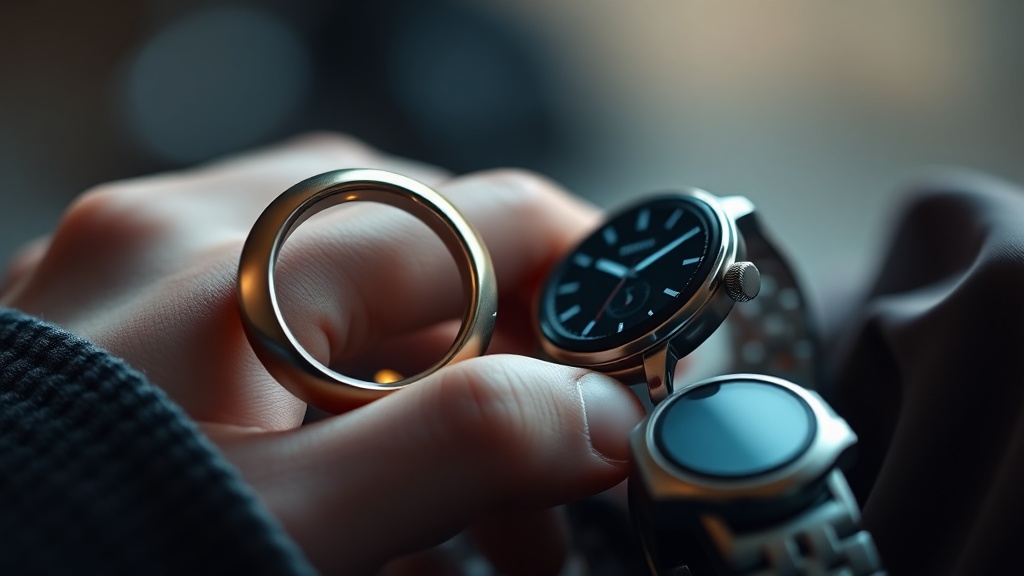
Smart Rings vs Smartwatches for Bio-hackers: The Recovery and Sleep Optimization Edge
Sleep architecture is where the smart ring’s advantage becomes clinically significant and practically irreplaceable.
Sleep is not a passive process. Slow-wave sleep drives growth hormone secretion, glymphatic clearance of amyloid beta, and glycogen repletion. REM sleep consolidates procedural memory and regulates emotional regulation circuits via prefrontal-amygdala coupling. If you are a bio-hacker and you are not measuring sleep stages longitudinally, you are operating with a fundamental blind spot in your optimization protocol.
The Oura Ring’s sleep staging algorithm — derived from accelerometry, skin temperature, and HRV — has been independently validated against polysomnography, with epoch-by-epoch agreement for wake/sleep detection exceeding 90% in multiple cohort analyses. Smartwatches have improved substantially, with the Sleep Foundation noting that newer Apple Watch and Fitbit models show comparable sleep stage detection accuracy to rings in controlled settings. But in practice, the comfort differential during sleep remains the deciding variable for most users.
Practically speaking, a device that generates technically superior data while sitting on your nightstand is clinically worthless. Wear compliance over 90+ consecutive nights — the minimum needed to establish meaningful baseline trends in bio-hacking contexts — favors the ring form factor in real-world conditions, not in lab settings where subjects are incentivized to maintain device use.
Smartwatches do win decisively on one sleep-adjacent metric: morning readiness protocols. The vibration haptic alert, the color screen showing your HRV trend before you’ve lifted your head off the pillow, the ability to immediately log a note about dream recall or subjective sleep quality — these interaction affordances shape behavior loops that rings simply cannot replicate with their minimal or absent display surfaces.
The Bio-Hacker’s Unpopular Opinion on Device Choice
Most guides won’t tell you this, but: for the majority of people running longevity-focused bio-hacking protocols, a smartwatch is the wrong primary device. The notification ecosystem, the social feedback loops baked into platforms like Garmin Connect, and the screen-on temptation all make smartwatches net-negative for the sleep hygiene and stress regulation they’re supposedly helping you track. You are wearing a distraction machine on your wrist and calling it health optimization. The irony is measurable — and I mean that literally. HRV suppression from smartphone and smartwatch notification exposure has been documented in occupational stress research, with sympathetic nervous system activation persisting for minutes after a single alert. A ring that silently records without demanding your attention is not a downgrade. For sleep quality and parasympathetic recovery, it may be a meaningful upgrade.
Battery Life, Data Sovereignty, and the Practical Reality of Daily Use
A device that dies at hour 18 of a 24-hour monitoring window has destroyed that day’s longitudinal dataset.
Smart rings operate on 4-7 day battery cycles in most real-world conditions, with the Oura Ring Gen 3 averaging approximately 5-6 days of continuous use. Smartwatches range from the Apple Watch’s 18-36 hours to Garmin’s solar-assisted models that can sustain week-long expeditions. For a bio-hacker building a 90-day intervention dataset, the charging rhythm of a smartwatch introduces systematic gaps in nighttime monitoring unless you own a spare or are disciplined about daytime charging windows.
Data sovereignty is an emerging concern in this space. Both smart rings and smartwatches aggregate sensitive physiological data — resting heart rate trends, menstrual cycle predictions, stress index scores — and transmit it to proprietary cloud platforms. Research published in PMC examining consumer health data privacy highlights that most wearable platform terms of service permit secondary use of anonymized biometric data for research and commercial purposes. For bio-hackers with serious privacy concerns, this should factor into device selection — and neither category is currently exempt from this issue.
In practice, the bio-hacker who treats their wearable data as a clinical asset — not a fitness gamification score — needs to think about export formats, API access, and interoperability with tools like Cronometer, Levels Health, or custom analysis pipelines. Both rings and watches vary enormously in their openness to third-party data access, and that technical dimension often matters more than sensor precision once you’re running multi-modal n=1 experiments.
Which One Should a Serious Bio-Hacker Actually Choose?
Real talk: the answer depends entirely on which biological question you are currently trying to answer. Bio-hacking is not a lifestyle — it is a hypothesis-driven experimental process. Different phases of that process have different instrumentation requirements.
If you are in a recovery and baseline establishment phase — mapping your autonomic nervous system patterns, identifying sleep architecture deficits, and calibrating circadian rhythm interventions — the smart ring is your primary instrument. Its passive, always-on, comfort-optimized design is matched to the physiological territory you’re investigating.
If you are in a performance optimization phase — testing HRV responses to training loads, monitoring glucose-exercise coupling, or quantifying cardiovascular adaptations to a specific protocol — a high-end smartwatch with chest strap pairing capability becomes the more appropriate primary device. The real-time feedback loop, GPS accuracy, and ECG-adjacent features are genuinely relevant to that experimental context.
The most rigorous bio-hackers I work with through the International Longevity Alliance use both — a ring for passive continuous monitoring and a watch during deliberate training windows. But if forced to pick one and only one for a 12-month longevity optimization protocol, I would choose the ring without hesitation. Sleep is the intervention with the largest and most consistent effect size across aging biomarkers, and no device optimizes sleep data capture like one you forget you’re wearing.
Frequently Asked Questions
Is a smart ring accurate enough to replace clinical HRV testing for bio-hacking purposes?
For longitudinal trend monitoring — the primary use case in bio-hacking — smart rings show acceptable accuracy for resting HRV during sleep compared to ECG reference standards under controlled conditions. They should not be used for clinical diagnosis or arrhythmia detection. Think of them as directionally reliable trend instruments, not medical-grade measurement tools.
Can I use both a smart ring and a smartwatch simultaneously without data conflicts?
Yes, and many serious bio-hackers do. Wearing both on the same day introduces some redundancy but also enables cross-validation between devices. The key is to designate one device as your primary sleep data source and one as your primary exercise data source, then analyze each in its intended context rather than averaging conflicting outputs.
Do smart rings work well for women tracking hormonal cycle-related HRV fluctuations?
This is an area of genuine emerging evidence. The Oura Ring’s cycle insight feature uses resting skin temperature, HRV, and resting heart rate to identify luteal and follicular phase patterns. Preliminary research suggests temperature-based cycle tracking correlates reasonably with basal body temperature measurements, though individual variation is high and this data should be interpreted alongside other hormonal markers, not in isolation.
The Insight That Reframes Everything
You came to this article asking which device is better. But the more useful question — the one that actually governs outcomes — is: which device makes you less likely to override your own data with confirmation bias? The bio-hacker who wears a smartwatch and ignores the HRV crash because they feel fine subjectively is getting worse results than the person with a smart ring who has no choice but to confront their recovery score each morning. The best wearable is the one that disciplines your interpretation, not the one with the most sensors. Form factor shapes cognition, and cognition drives the interventions that actually change your biological age.
References
- Hautala, A.J., et al. (2020). “Validation of Oura Ring Photoplethysmography-Based Heart Rate Variability.” Frontiers in Physiology. frontiersin.org
- Sleep Foundation. (2023). “Consumer Sleep Wearables and Sleep Stage Detection Accuracy.” sleepfoundation.org
- Grundy, Q., et al. (2019). “Data Sharing Practices of Medicines Related Apps and the Mobile Ecosystem.” BMJ. doi:10.1136/bmj.l1147
- PMC Review on Consumer Health Data Privacy. (2022). National Library of Medicine. ncbi.nlm.nih.gov
- Hernando, D., et al. (2018). “Validation of the Apple Watch for Heart Rate Variability Measurements during Relax and Mental Stress.” Entropy. doi:10.3390/e20060421
- Vitale, J.A., et al. (2022). “Wearable Technology for Sleep Monitoring in Athletes: A Systematic Review.” International Journal of Environmental Research and Public Health.